
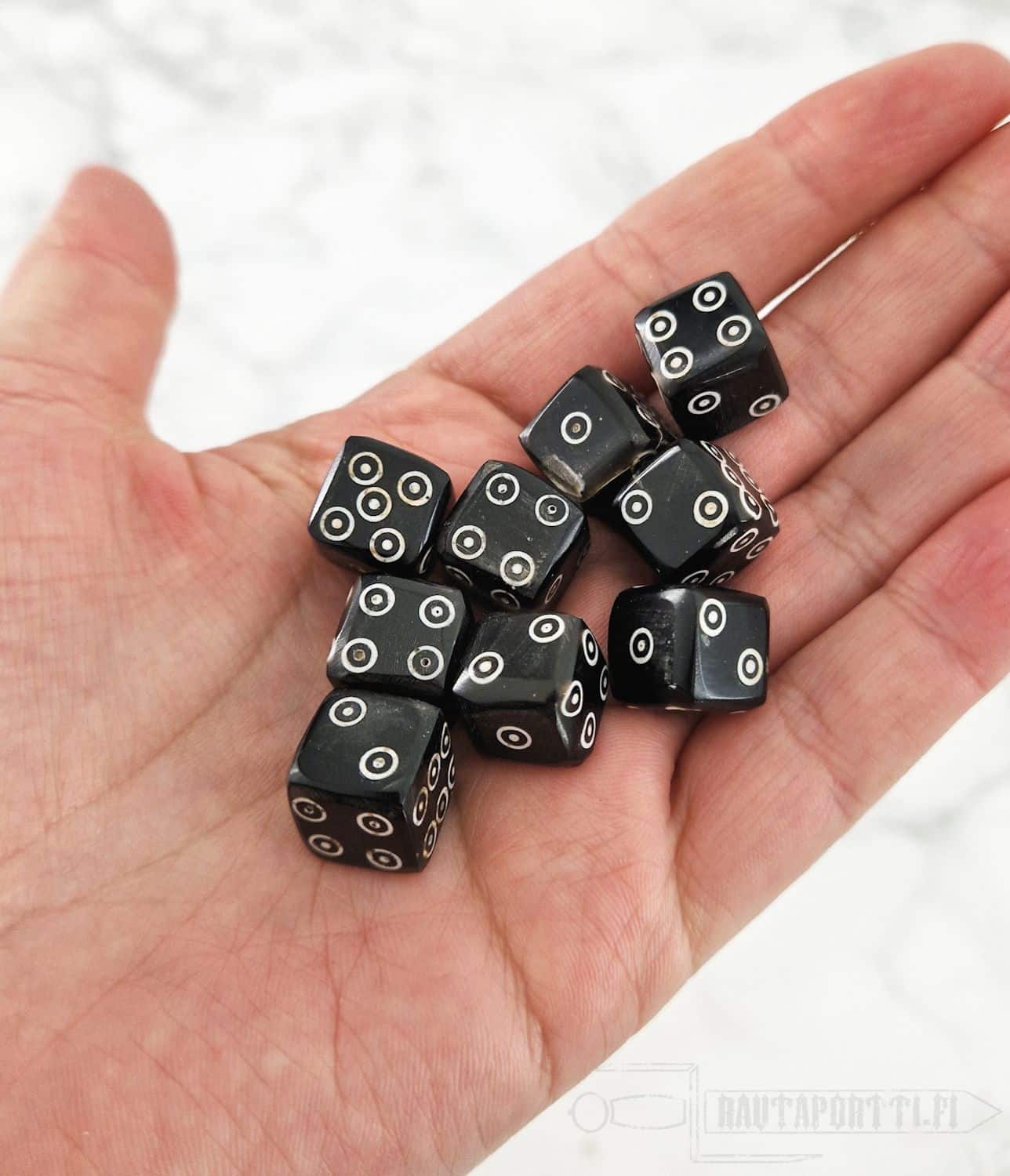
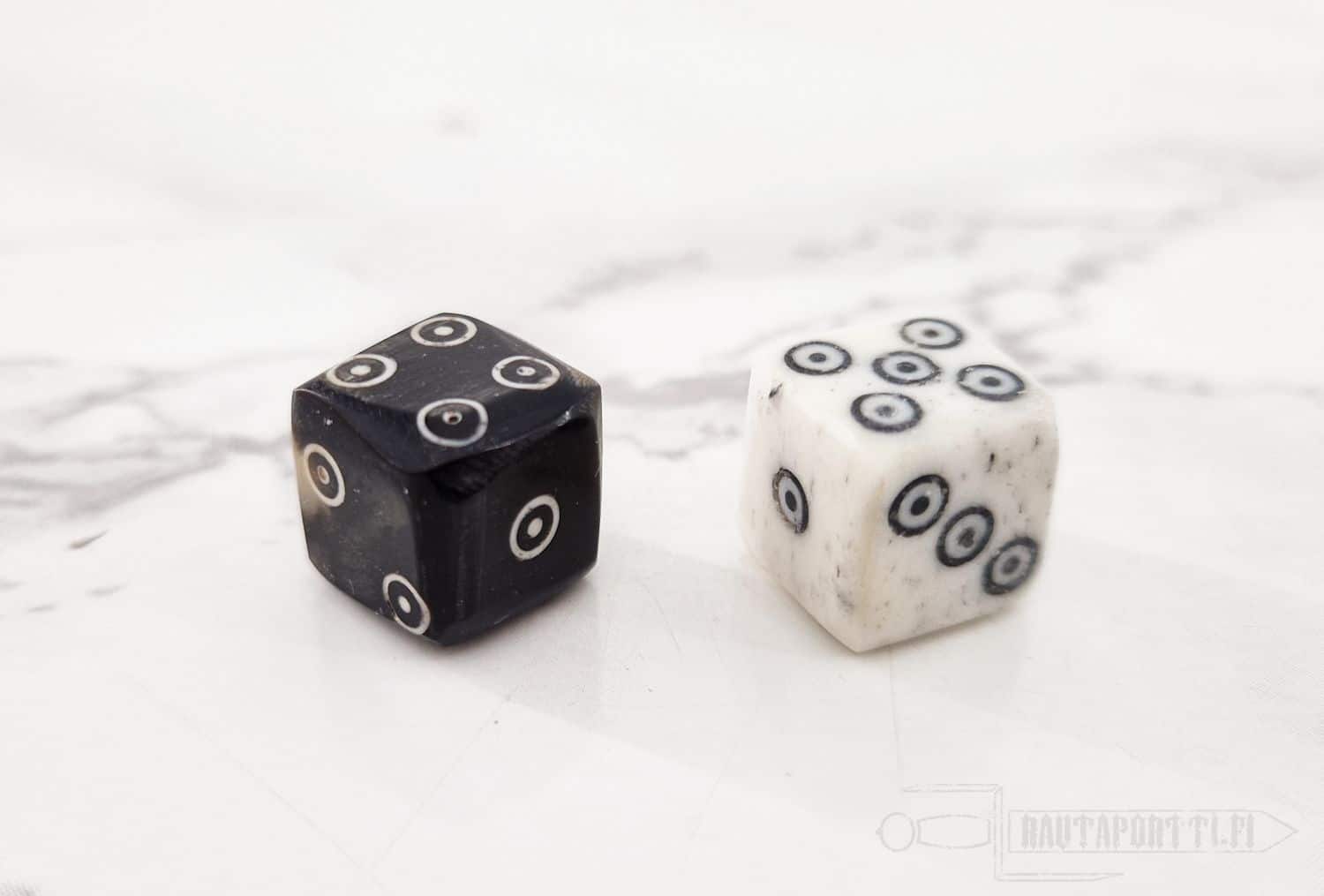
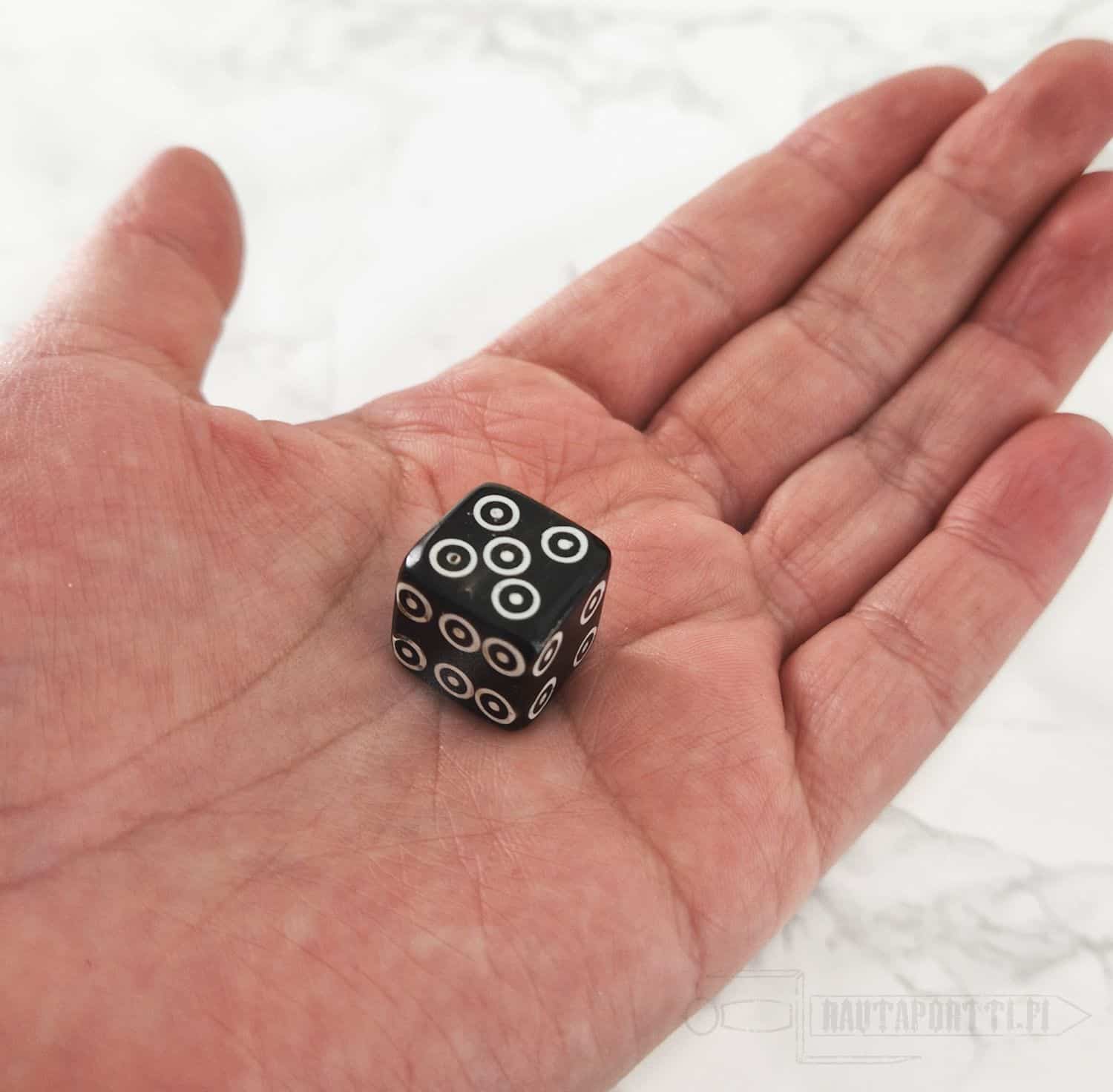
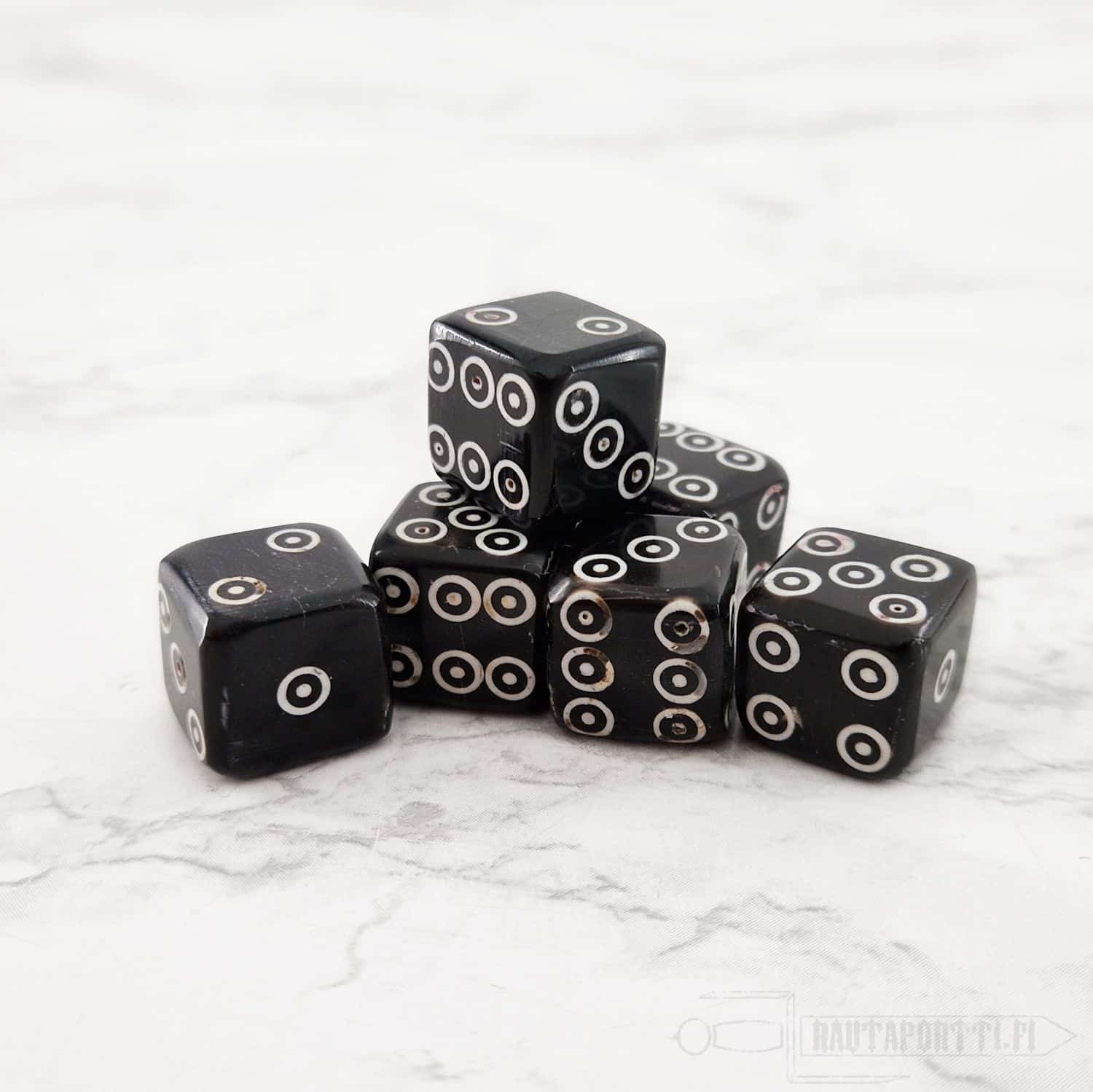

Historical Black Horn Dice -2pcs
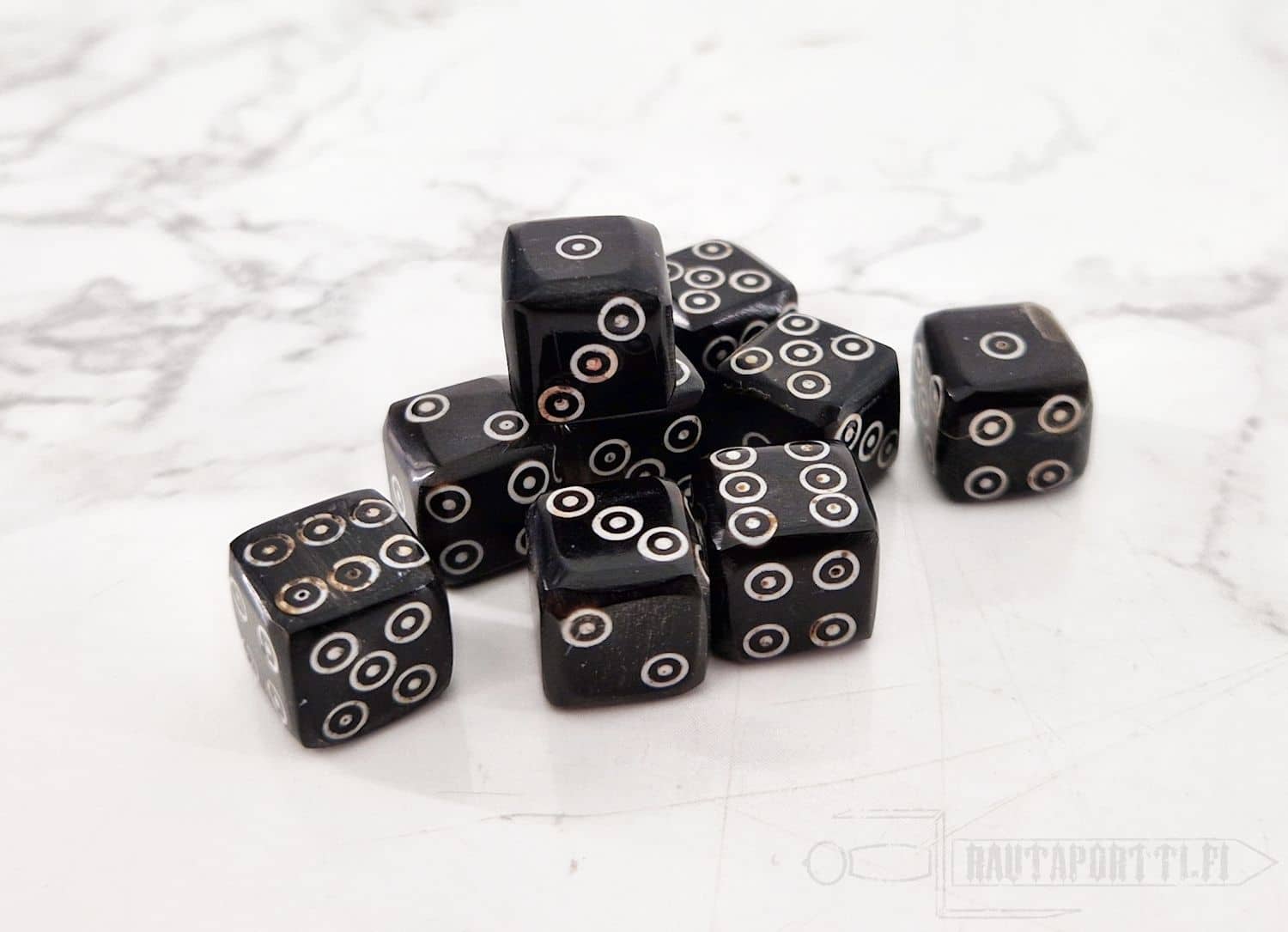
- Sold in sets of two -Price includes 2 pcs
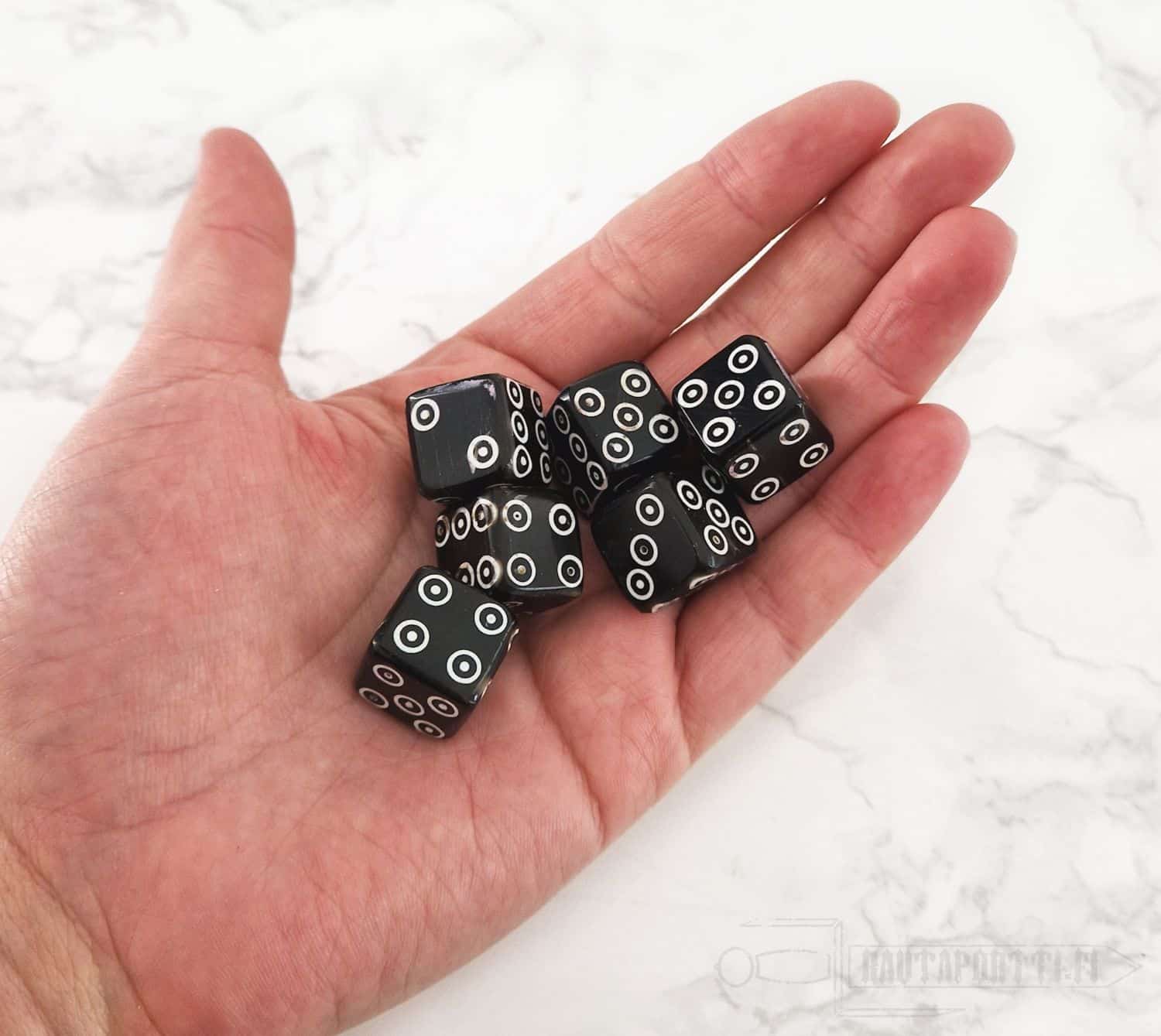
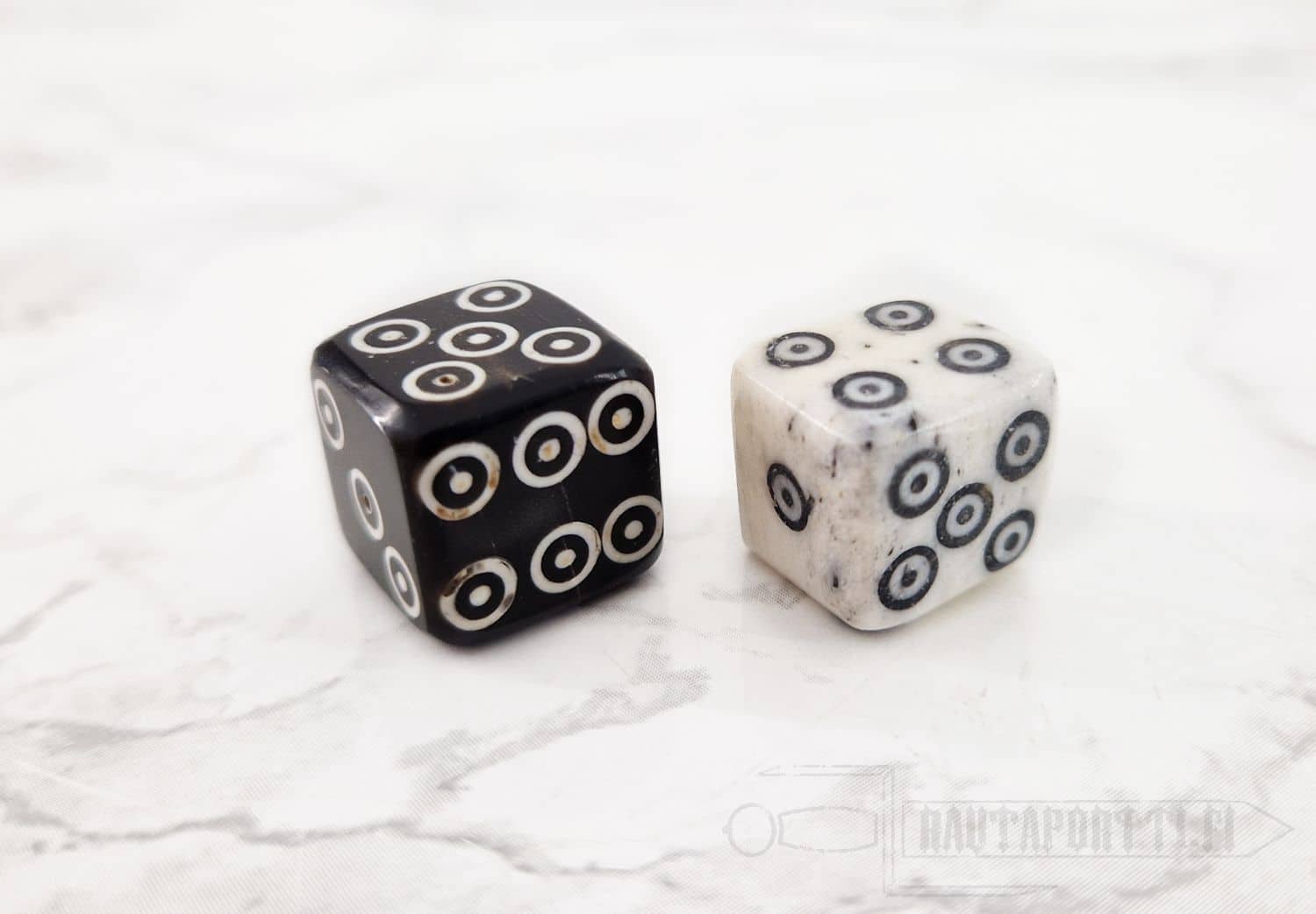
- Made of real horn just like the originals
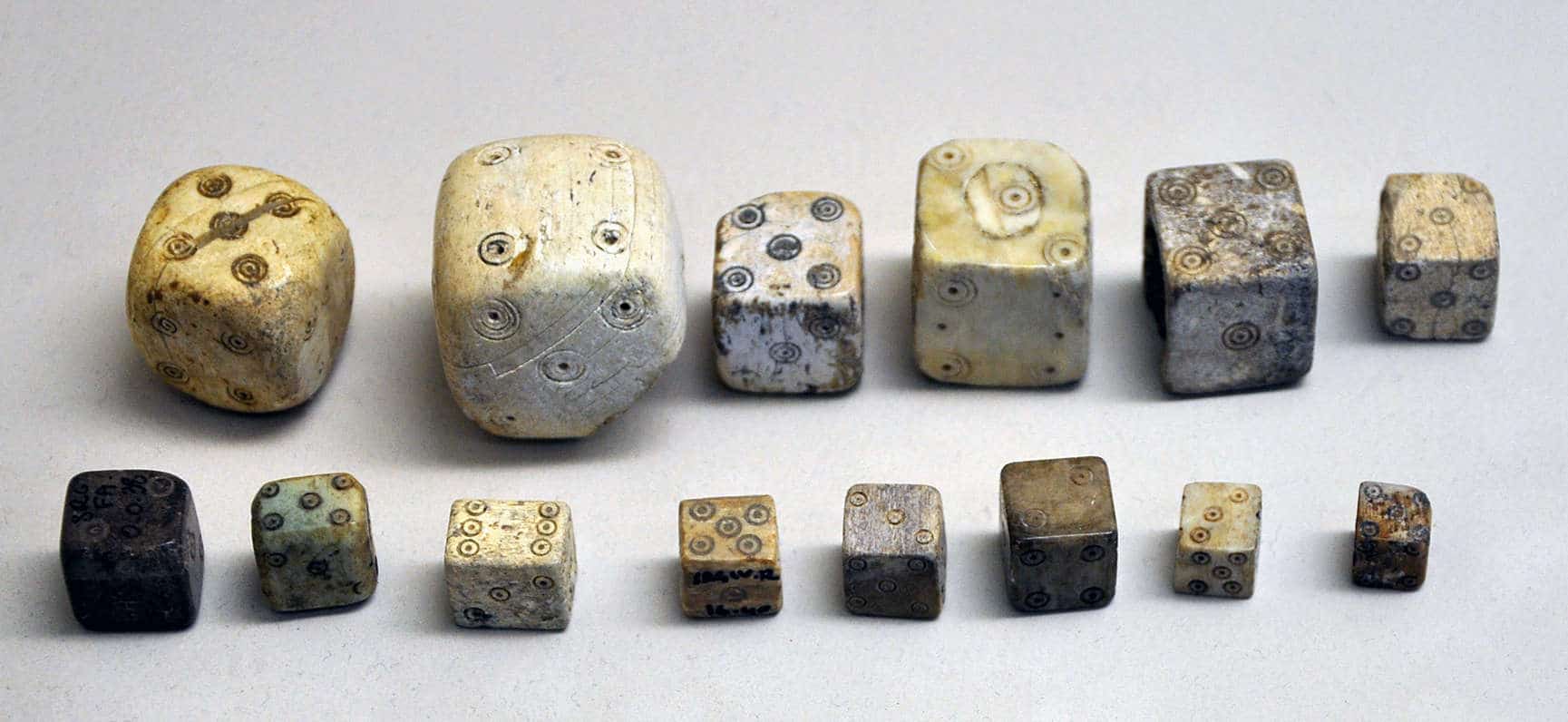
- Replica of numerous originals from all over Europe
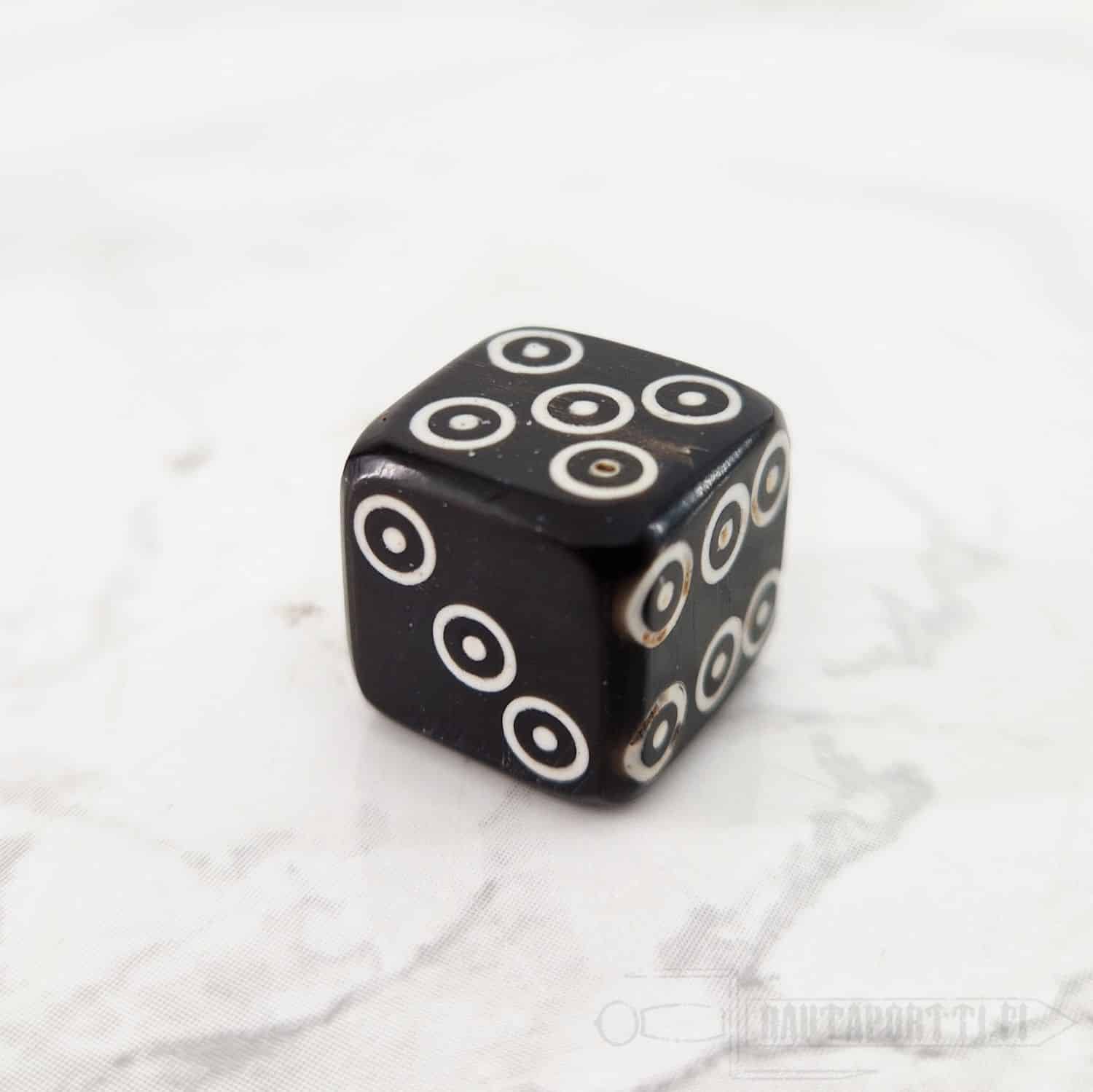
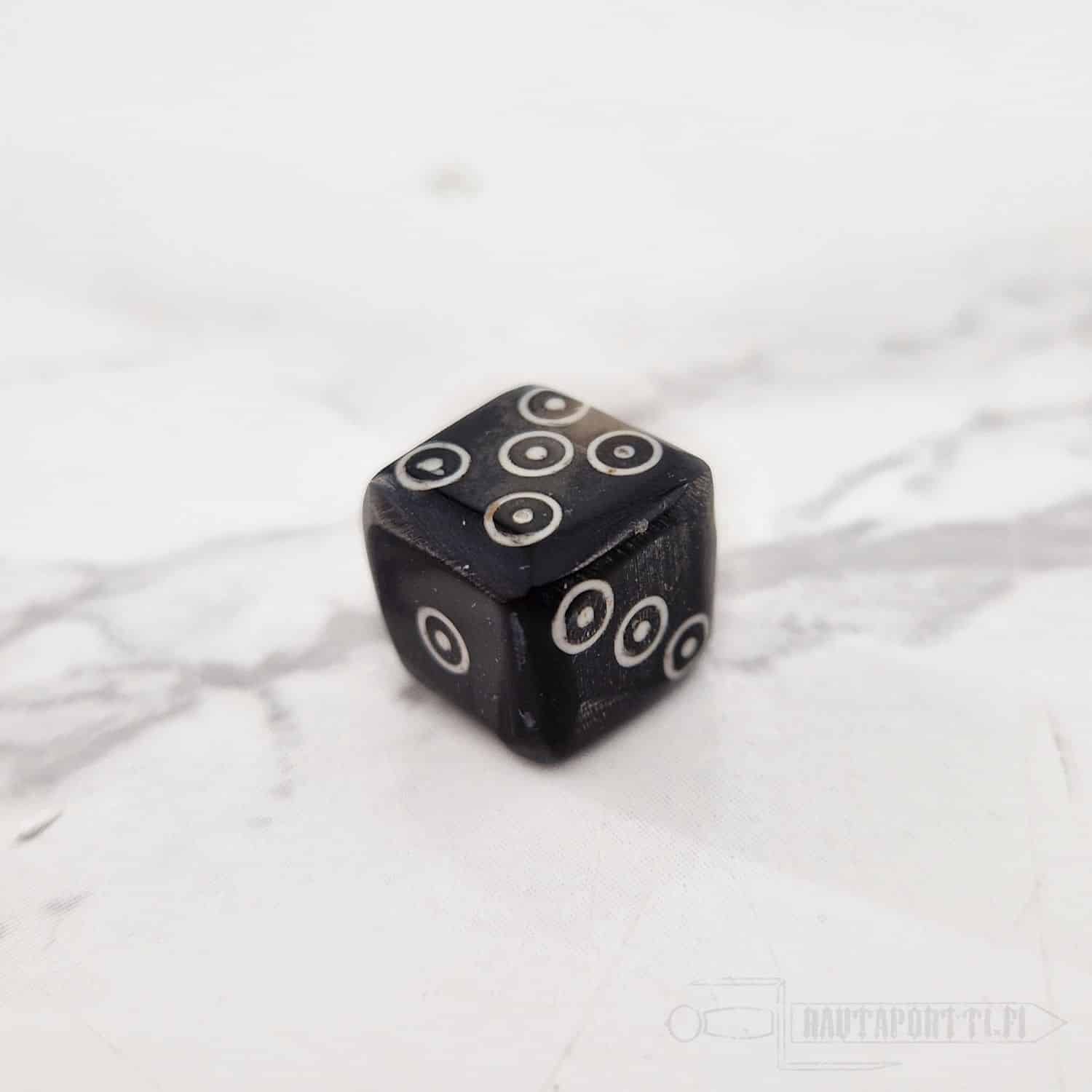
- Roman dots –ring around central dot
- White dots on black horn
- Slightly rounded edges
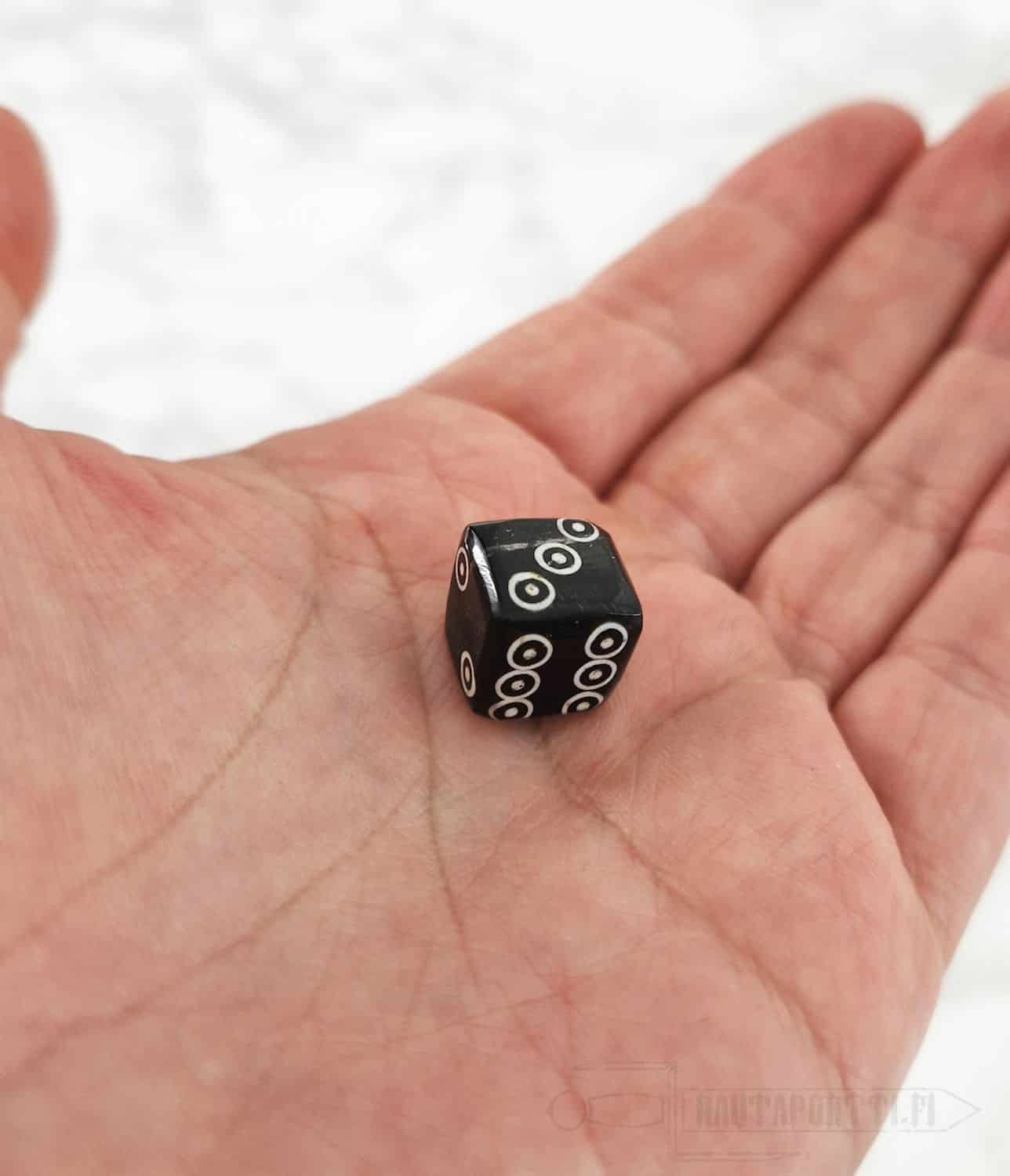
- Small size approx. 11 mm x 11 mm x 11 mm
- Medium size approx. 14 mm x 14 mm x 14 mm
- Each piece is made by hand so there will be slight variance in size and shape
- Bone and horn are natural materials so each piece is unique
- Bone and horn are biodegradable and great substitute for plastic dice
- Historical dices available in bone and horn in small and medium sizes and as four-sided long dice
Price range: 3.95€ through 4.50€
Description of the Product
Dice have been used for gaming and divination for thousands of years, and some of the earliest six-sided dice that resemble modern ones date back to Mesopotamia around 2800 BCE. These early dice were often made from bone, particularly sheep and cattle bones, as they were readily available and easy to carve. Unlike earlier knucklebones (astragali), which had irregular shapes, six-sided dice became common in ancient Egypt, the Indus Valley, and Greece. The Romans later adopted and standardized the use of cubic dice (tesserae), crafting them from bone, horn, ivory, and clay for gambling and board games. Roman dice sets have been found across the empire, showing how widespread these games were.
During the Viking Age, dice games were popular among Norse warriors and traders. Viking dice sometimes had irregular shapes, possibly affecting game strategies. Archaeological finds from sites like Birka and Hedeby reveal that the Vikings played games similar to modern dice gambling, reinforcing the idea that gaming was a common pastime. In addition to bone also horn and wood were used as materials for dice, but these don’t last in the ground like bone does so these are less commonly preserved in archaeological records. For the Vikings, dice were not only tools for games and entertainment but also integral to their culture, often used in gambling, divination, and rituals to influence fate, settle disputes, and make important decisions.
In Medieval Europe, dice games remained incredibly popular, despite repeated attempts by religious authorities to ban gambling. Craftsmen produced dice from bone and horn, sometimes shaping them into standard cubes, but also experimenting with elongated or rectangular forms. Medieval travelers, soldiers, and merchants frequently carried dice, making them one of the most widespread forms of entertainment. Some dice were finely carved and polished, while others were crudely made for everyday use.
In the 17th and 18th centuries, dice games remained a favorite pastime among sailors, soldiers, and gamblers, including those in the age of piracy. Bone and horn dice were commonly used aboard ships, as they were lightweight, durable, and easy to carry. Pirates and privateers were known to gamble with dice during long voyages, wagering coins, rations, or even clothing. In taverns and gambling houses across Europe and the American colonies, bone dice were a staple of gaming tables, often used in games like Hazard—the predecessor of modern craps. Today, historical replicas of these dice offer an authentic way to experience gaming as it was played during the Golden Age of Sail.
These dice have roman dots on them. Roman dots, used on ancient dice from the Roman era through the Middle Ages, were typically shallow cuts rather than fully round pips, as these were easier to carve into bone, horn, or ivory. This style remained common in Viking and medieval dice, though by the late medieval and early Renaissance periods (15th–16th centuries), more dice began featuring drilled, rounded pips as craftsmanship improved. By the 17th century, fully round dots had become the standard, replacing the older Roman-style markings on most dice.
Our replicas of historical dice bring ancient traditions back to life, allowing players to experience games like those enjoyed by the Romans, Vikings, and medieval gamblers. Perfect for reenactment or larp, but suits just as well to be used with modern games.
- Sold in sets of two -Price includes 2 pcs
- Made of real horn just like the originals
- Replica of numerous originals from all over Europe
- Roman dots –ring around central dot
- White dots on black horn
- Slightly rounded edges
- Small size approx. 11 mm x 11 mm x 11 mm
- Medium size approx. 14 mm x 14 mm x 14 mm
- Each piece is made by hand so there will be slight variance in size and shape
- Bone and horn are natural materials so each piece is unique
- Bone and horn are biodegradable and great substitute for plastic dice
- Historical dices available in bone and horn in small and medium sizes and as four-sided long dice
- Manufacturer: Karhunhammas - Beartooth

Absolutely worth visiting. Things to wonder and admire for hours and to buy... Don't tell your spouse unless he/she is also an enthusiast :)
Customers who bought this were also interested in...


You may also like…


Products are located in our own storehouse
In Kaarina, Finland.

Fast shipping
Orders are shipped out within 24 hours of us receiving the order.

Purchase online or offline
You can also pickup your order at our store.

Flexible payments
We accept Credit Cards & Online Banks etc.




Our Store
All orders can also be picked up from the brick-and-mortar store at Oppipojankuja 1, 20780 Kaarina. 10min drive from the centre of Turku.
Welcome!
Reviews
There are no reviews yet.