
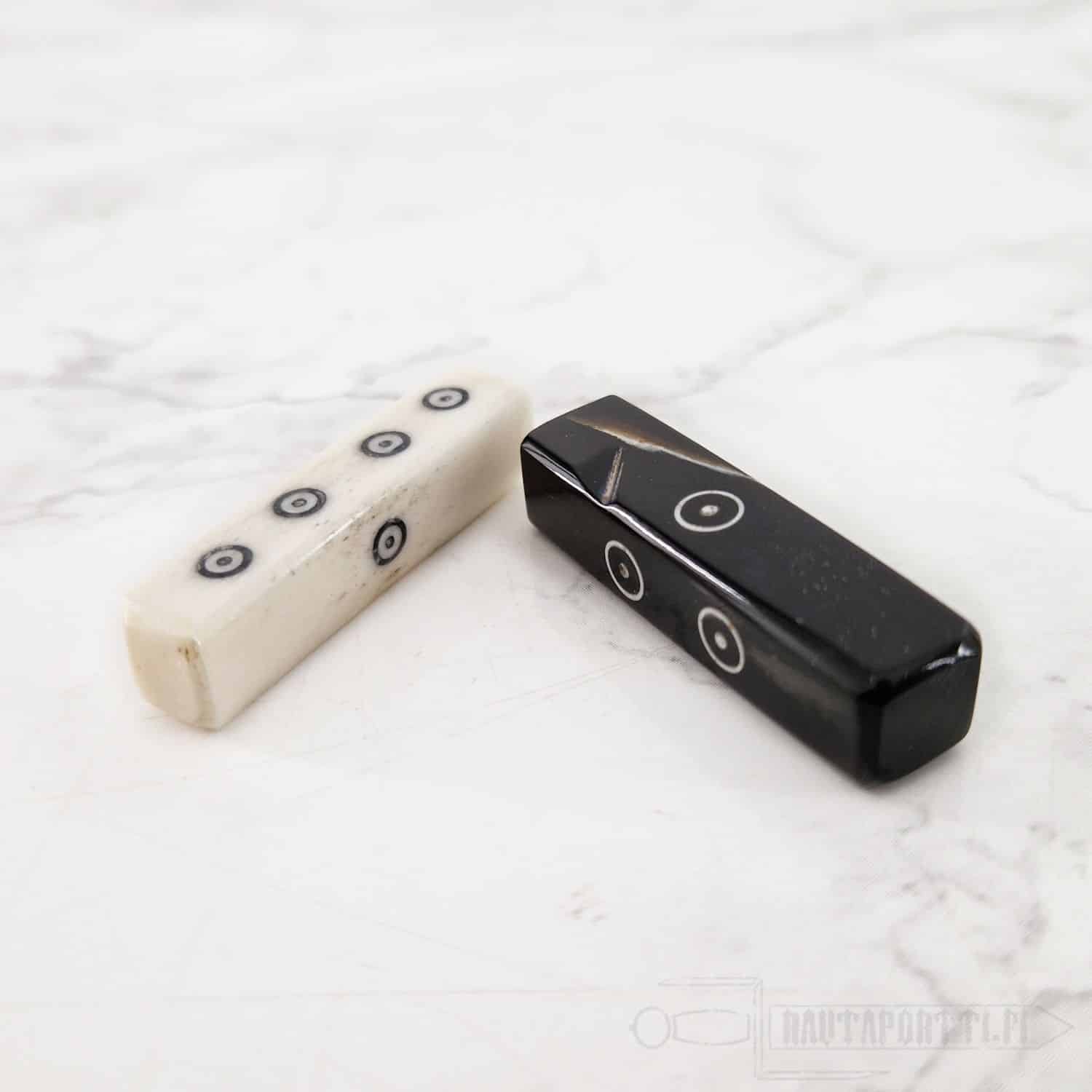
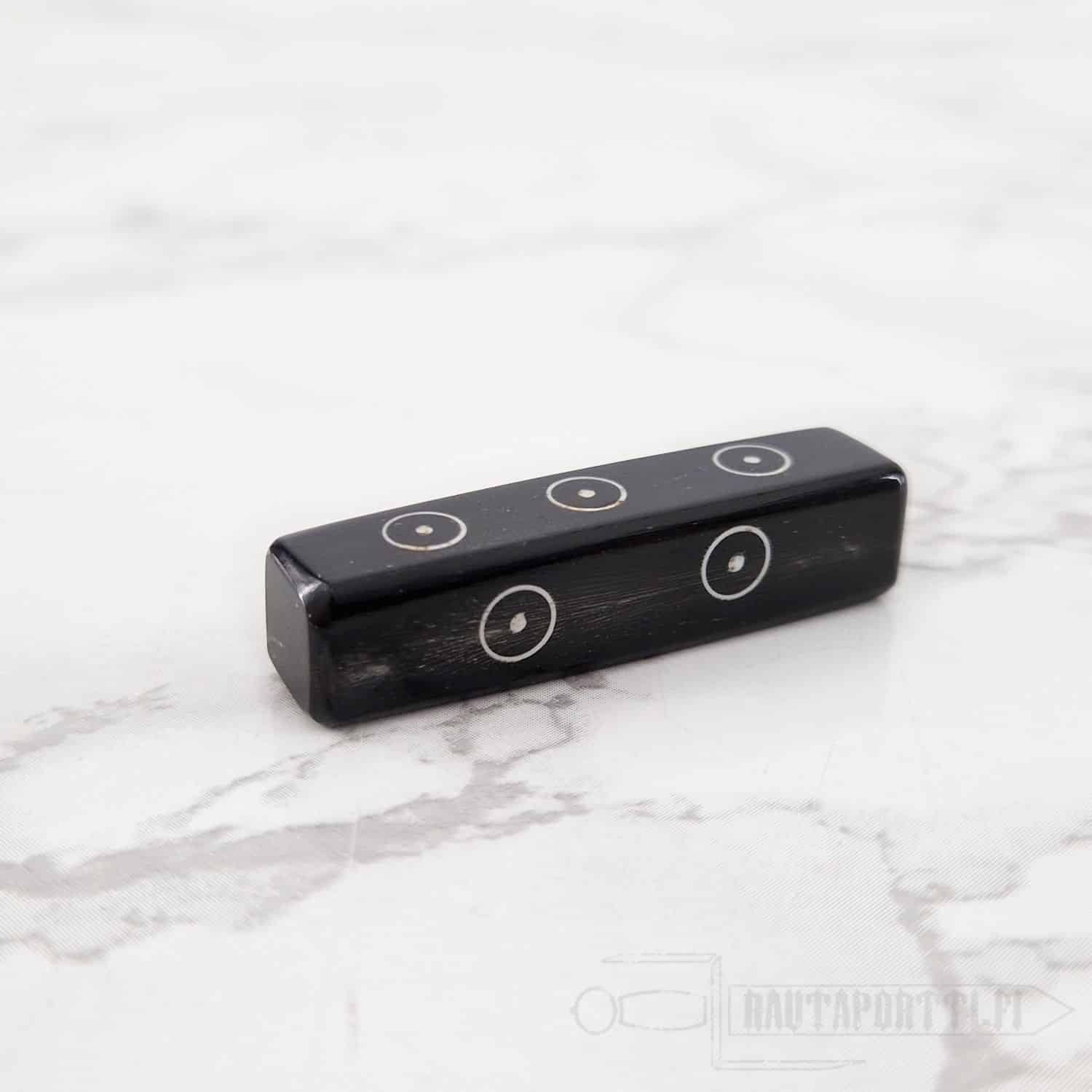
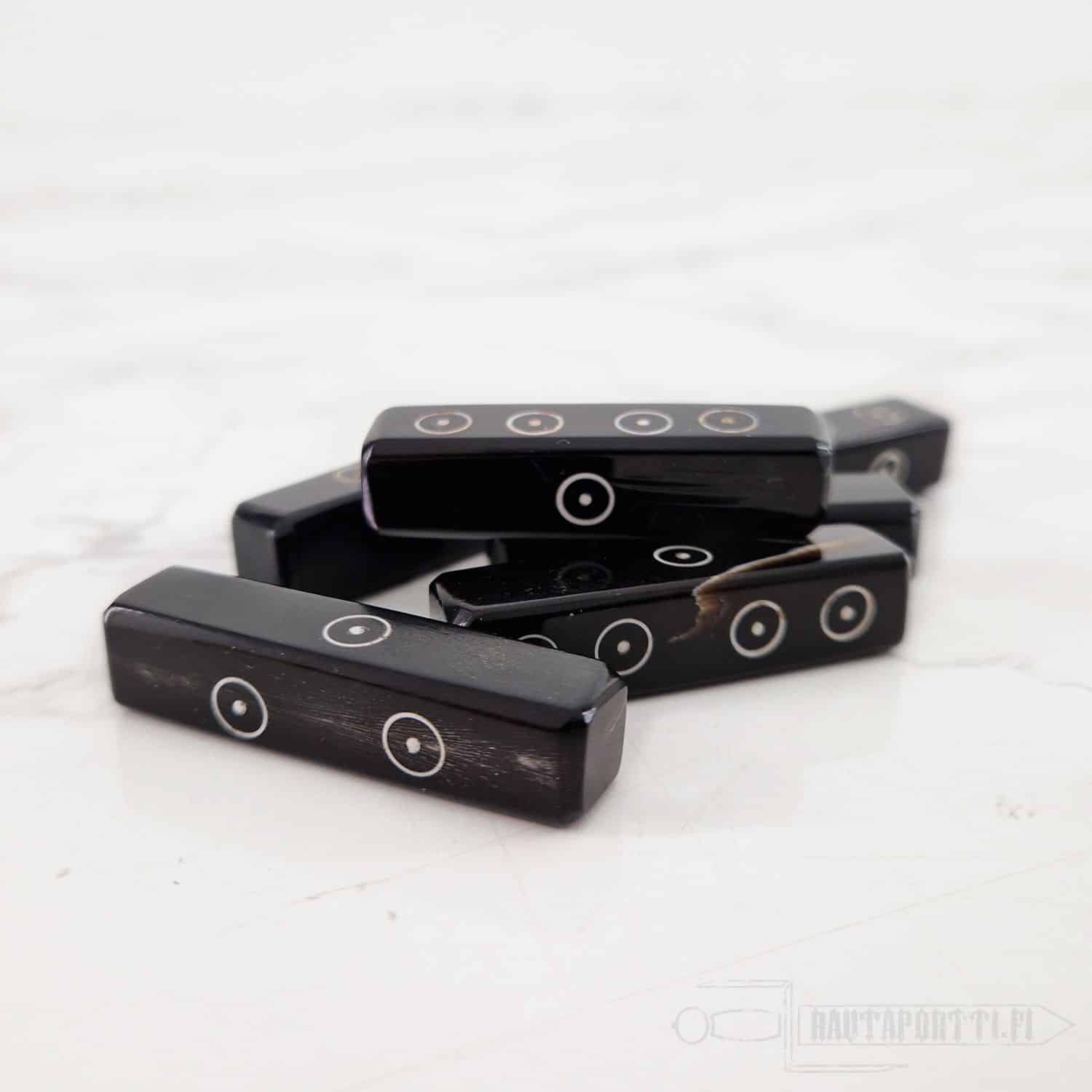
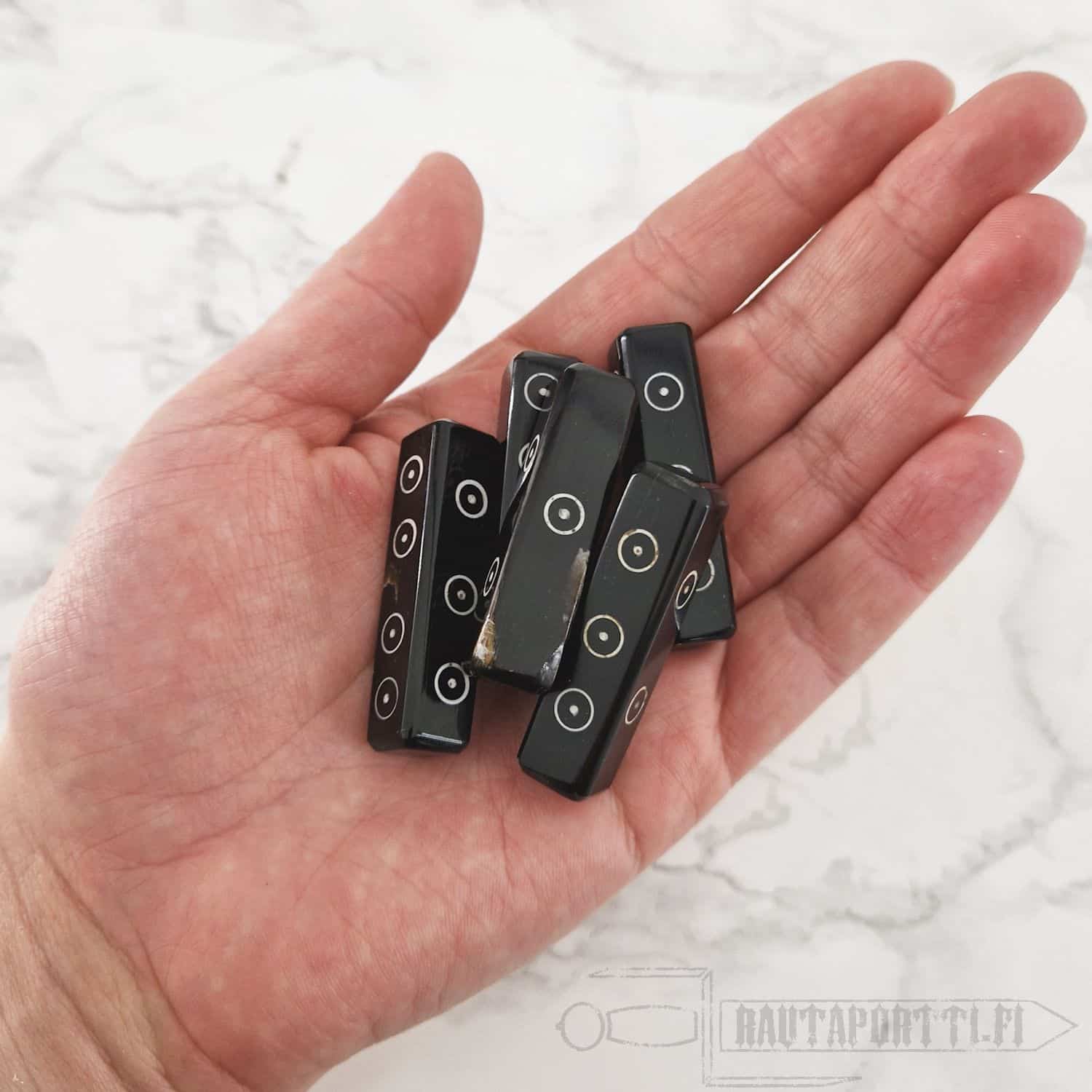
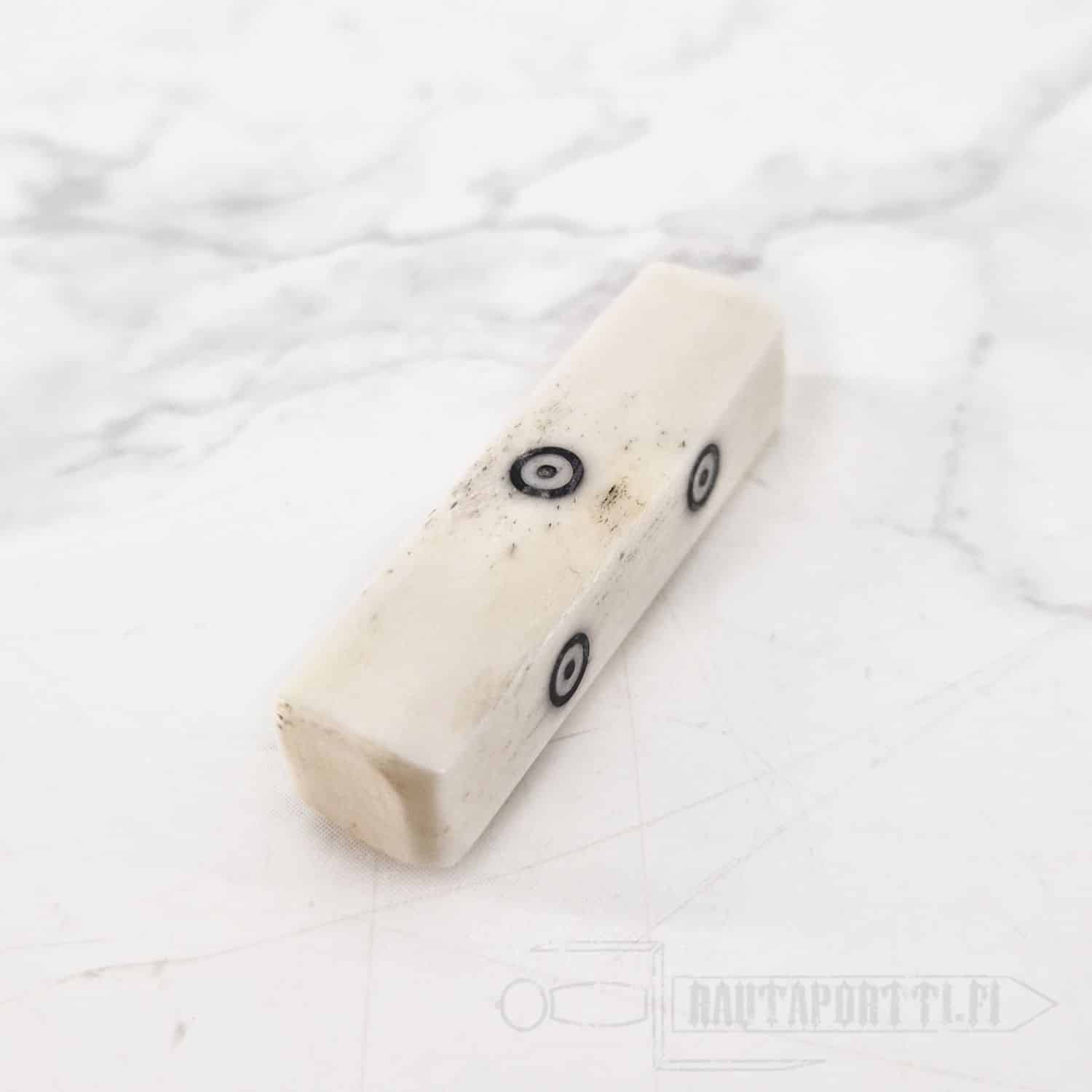
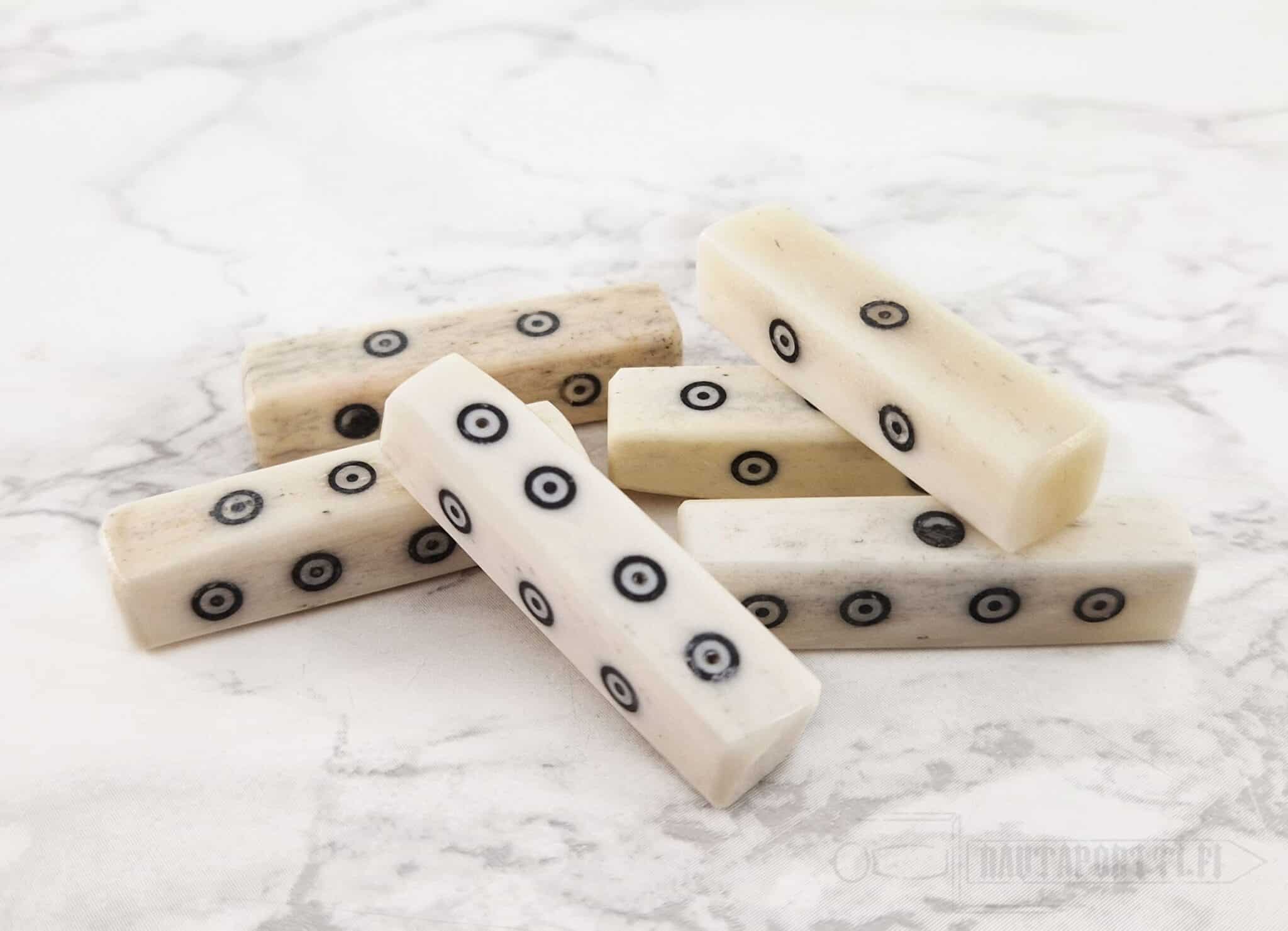
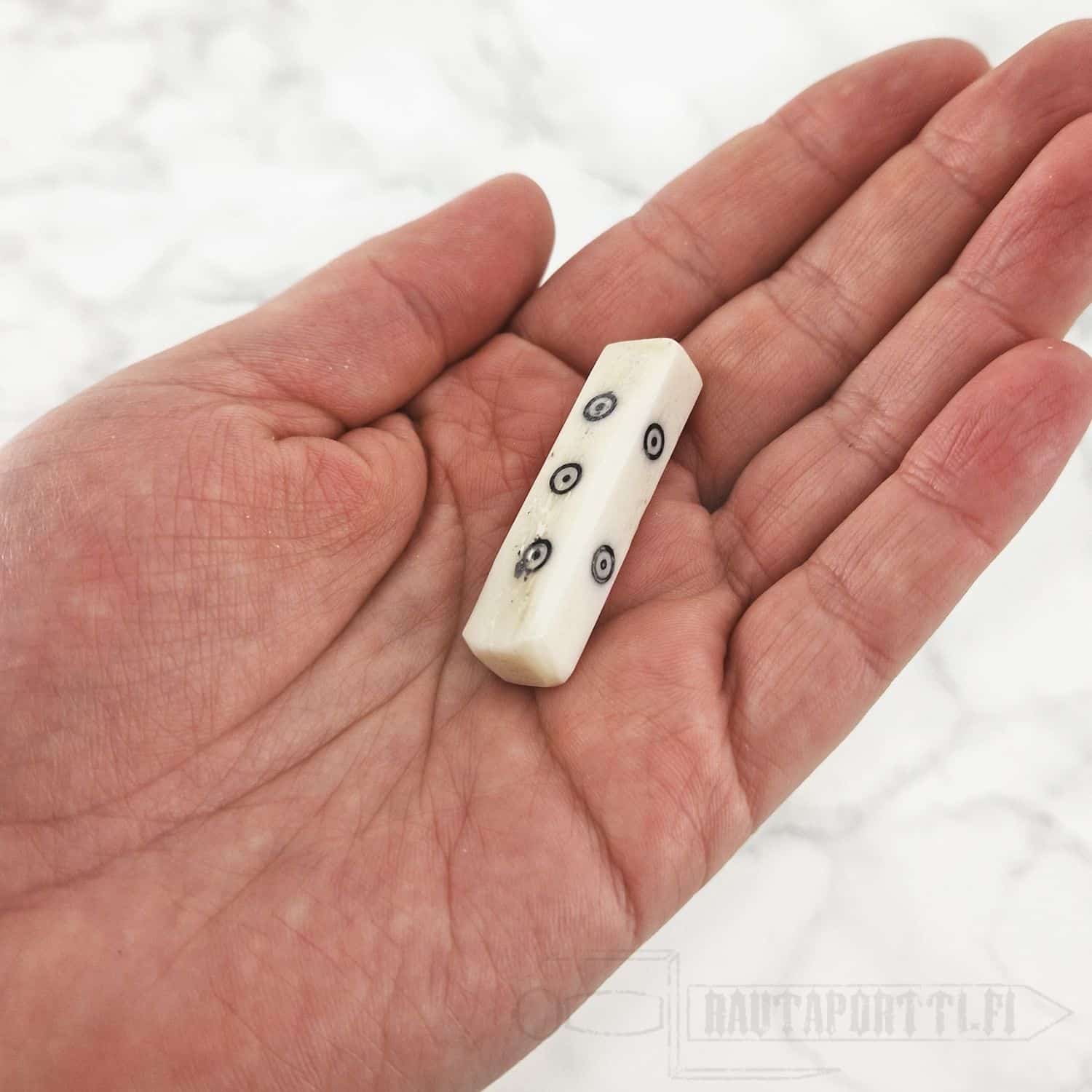


Historical Long Four-sided Dice -2pcs
- Sold in sets of two -Price includes 2 pcs
- Made of real bone and horn just like the originals
- Replica of originals found all over Europe
- Roman dots –ring around central dot
- Slightly rounded edges
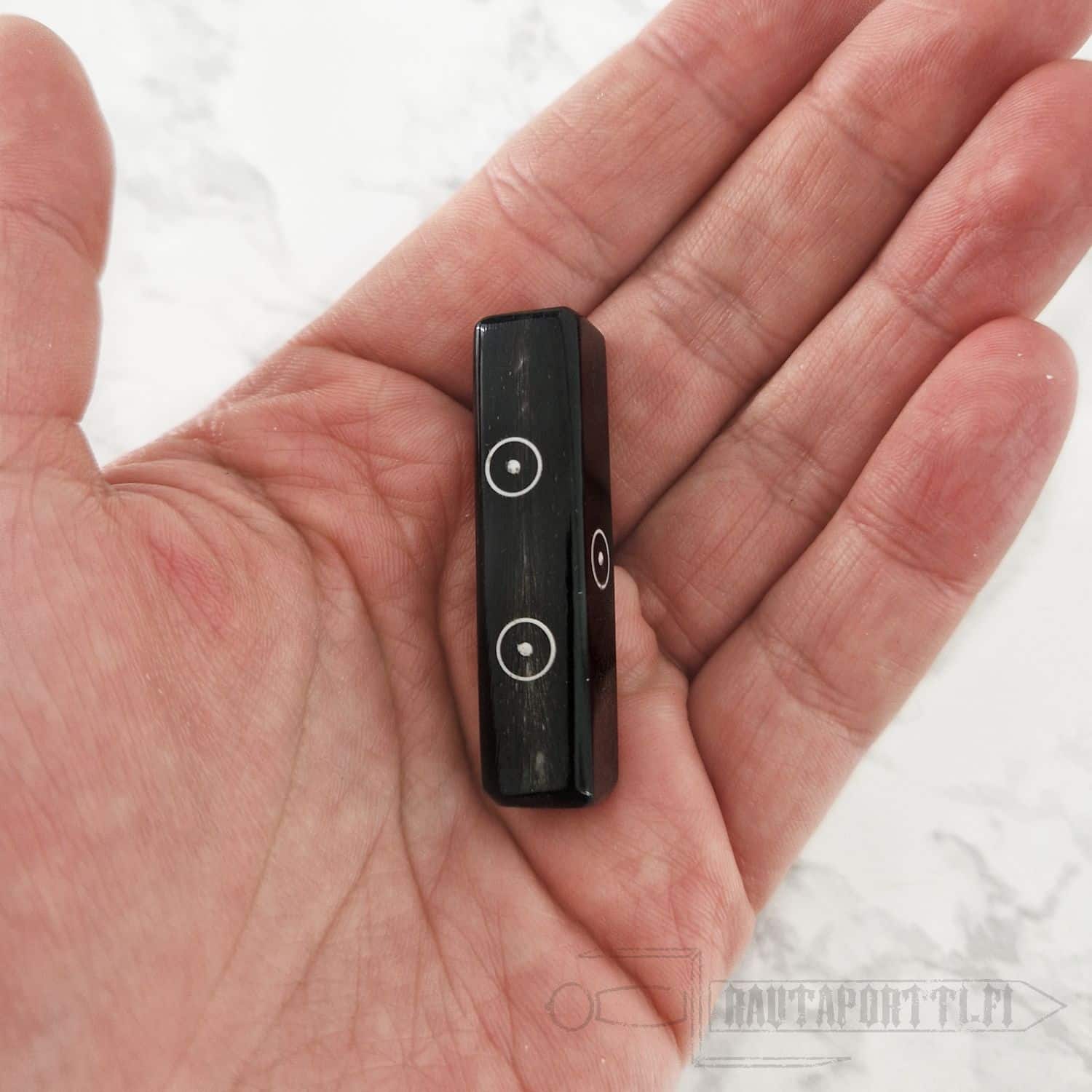
- Size approx. 9.5 mm x 9.5 mm x 40 mm
- Each piece is made by hand so there will be slight variance in size and shape
- Bone and horn are natural materials so each piece is unique
- Bone and horn are biodegradable and great substitute for plastic dice
- Historical dices available in bone and horn in small and medium sizes and as four-sided long dice
5.50€
Description of the Product
Long, oblong four-sided dice, also known as long dice, have a fascinating history stretching across ancient and medieval cultures. The earliest examples date back to the Roman Empire, where they were found across Europe. Their distinctive rectangular shape allowed for a unique rolling method, setting them apart from traditional cubic dice. Long dice were often tied to fate and decision-making, making them significant in both entertainment and ritual contexts.
During the Migration Period (Roman Iron Age), long dice spread to Scandinavia, where they became a part of Viking and medieval society. These dice were found in burial sites, which suggests they had both a recreational and ceremonial role. In Viking culture, long dice were used in gambling and potentially in divination, offering a connection to fate and the gods. The Vikings may have relied on the roll of the dice for decision-making during important events, like raids or feasts, where the outcome could influence the course of their lives.
In the Medieval period, the use of long dice continued. Archaeological finds show these dice were sometimes inscribed with numbers or symbols and were used not only for entertainment but probably also in ritualistic practices. Long dice could have played a role in determining the outcome of important social or spiritual decisions. Their presence in burial sites reflects their value beyond mere gaming, symbolizing fate or divine will.
Surviving examples of long dice are rare but crucial in understanding ancient and medieval gaming cultures. Finds for example from Scandinavia, Britain and Germany offer insight into their design and use.
These dice have roman dots on them. Roman dots, used on ancient dice from the Roman era through the Middle Ages, were typically shallow cuts rather than fully round pips, as these were easier to carve into bone, horn, or ivory. This style remained common in Viking and medieval dice, though by the late medieval and early Renaissance periods (15th–16th centuries), more dice began featuring drilled, rounded pips as craftsmanship improved. By the 17th century, fully round dots had become the standard, replacing the older Roman-style markings on most dice.
- Sold in sets of two -Price includes 2 pcs
- Made of real bone and horn just like the originals
- Replica of originals found all over Europe
- Roman dots –ring around central dot
- Slightly rounded edges
- Size approx. 9.5 mm x 9.5 mm x 40 mm
- Each piece is made by hand so there will be slight variance in size and shape
- Bone and horn are natural materials so each piece is unique
- Bone and horn are biodegradable and great substitute for plastic dice
- Historical dices available in bone and horn in small and medium sizes and as four-sided long dice
- Manufacturer: Karhunhammas - Beartooth

Wide and high-quality selection, fast delivery and friendly staff. I recommend!
Customers who bought this were also interested in...


You may also like…


Products are located in our own storehouse
In Kaarina, Finland.

Fast shipping
Orders are shipped out within 24 hours of us receiving the order.

Purchase online or offline
You can also pickup your order at our store.

Flexible payments
We accept Credit Cards & Online Banks etc.
Our Store
All orders can also be picked up from the brick-and-mortar store at Oppipojankuja 1, 20780 Kaarina. 10min drive from the centre of Turku.
Welcome!
Reviews
There are no reviews yet.