
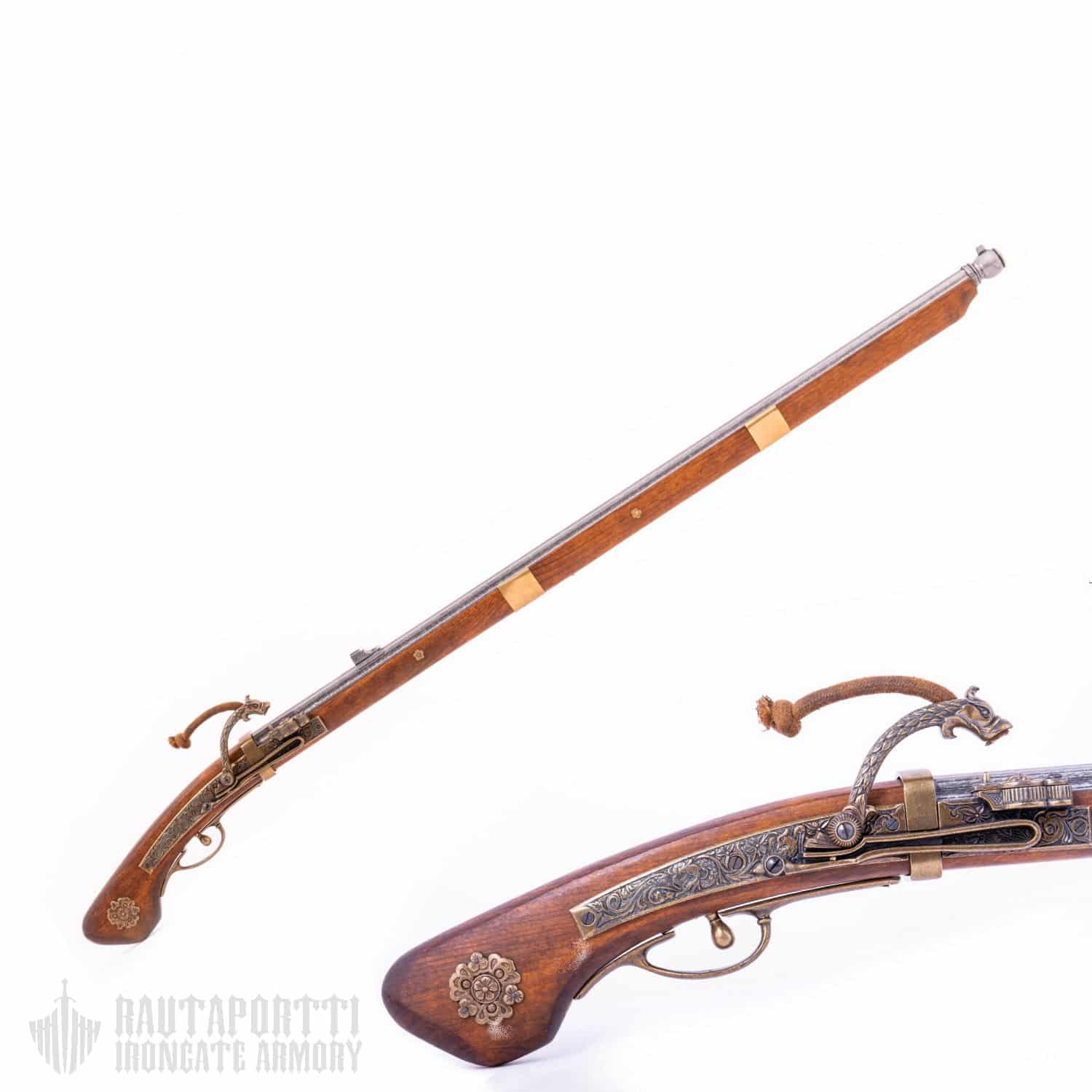
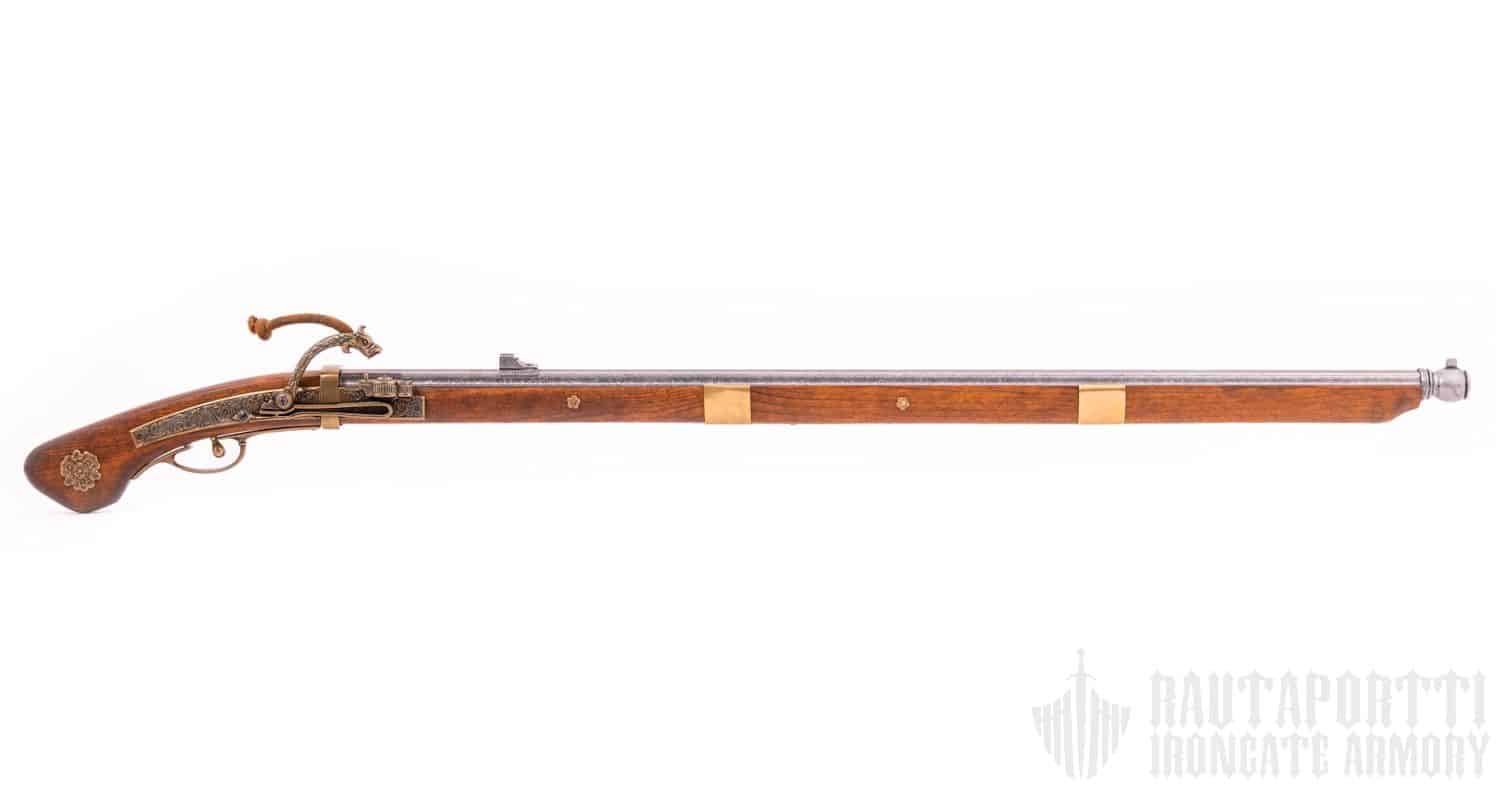
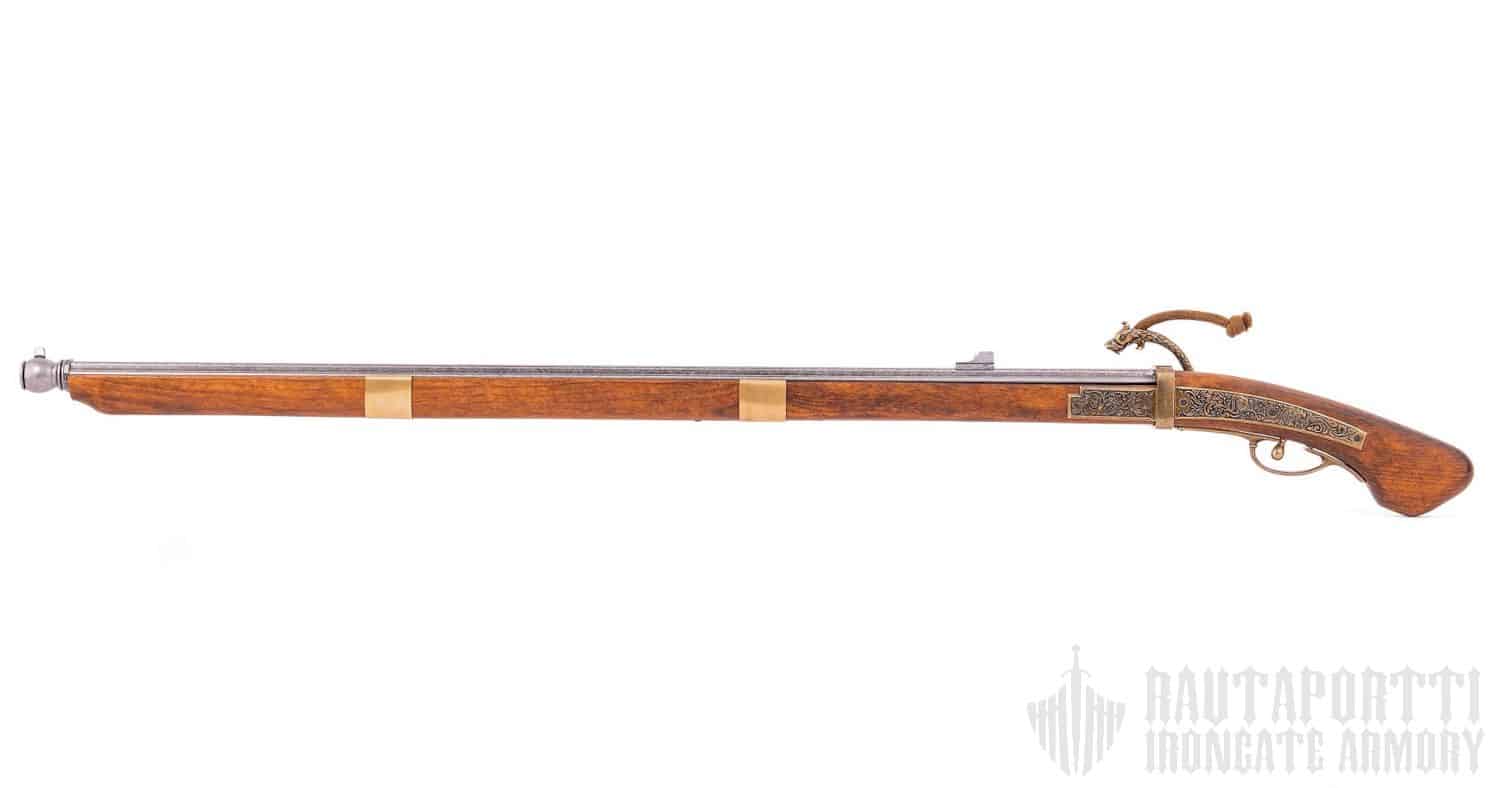
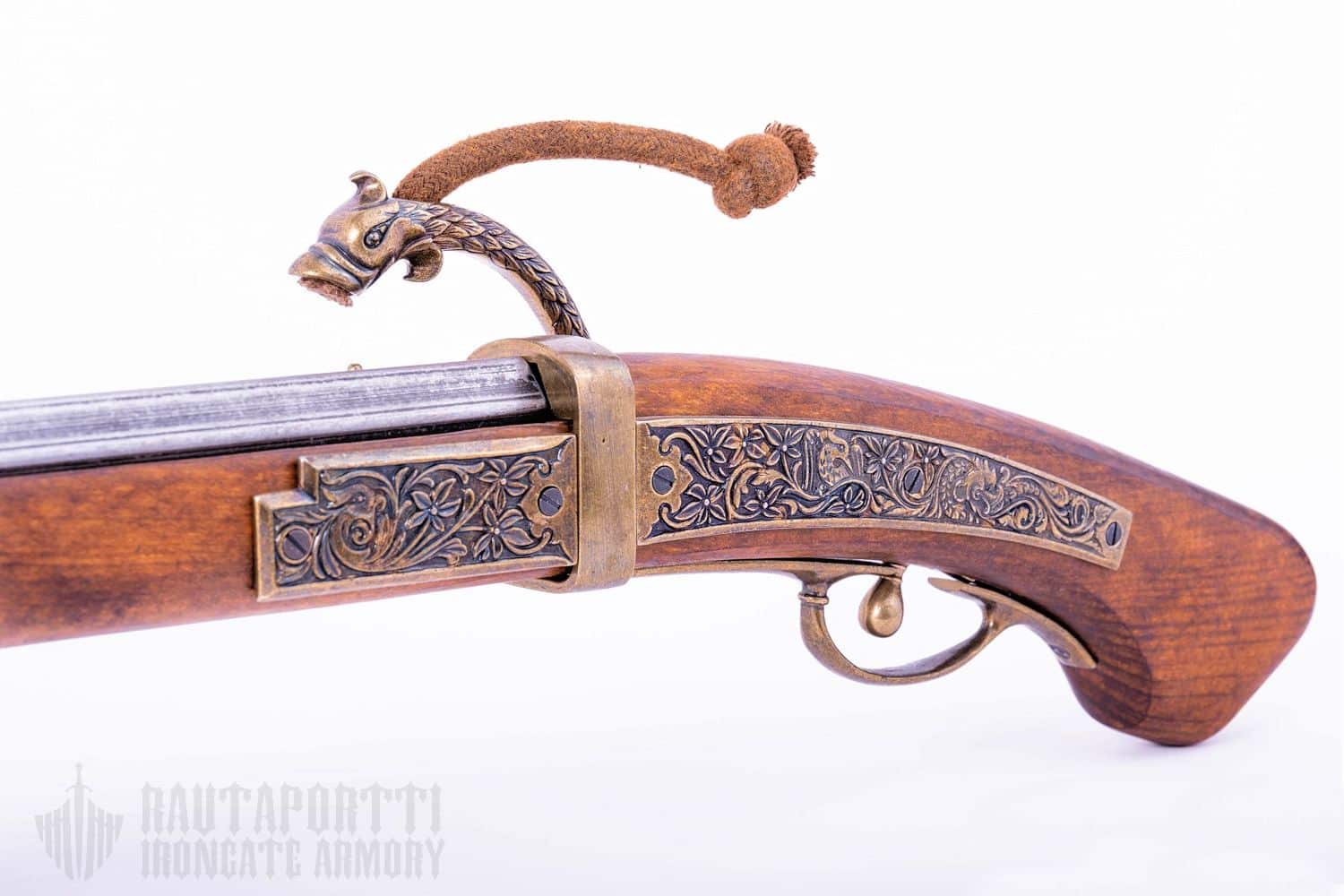
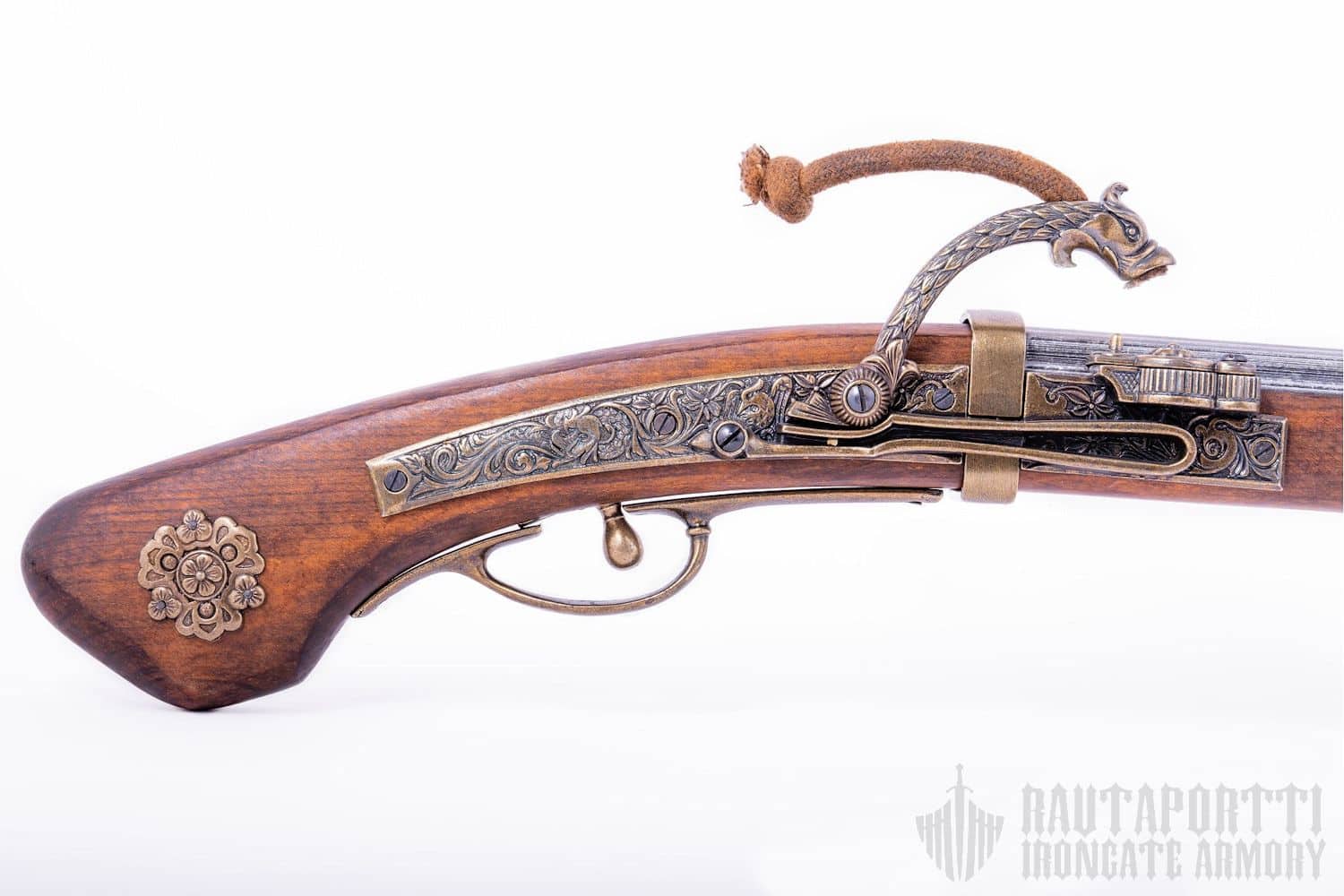
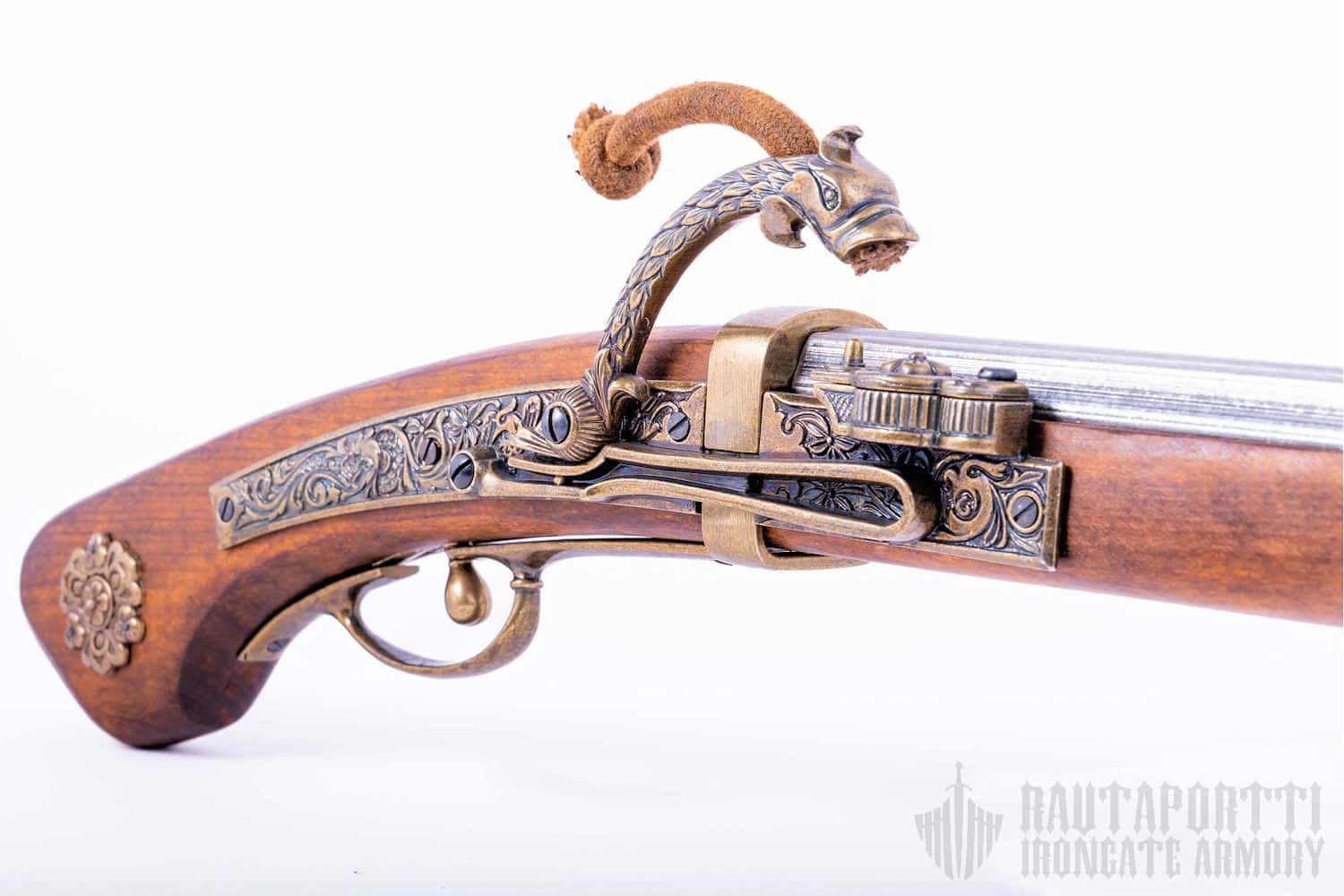
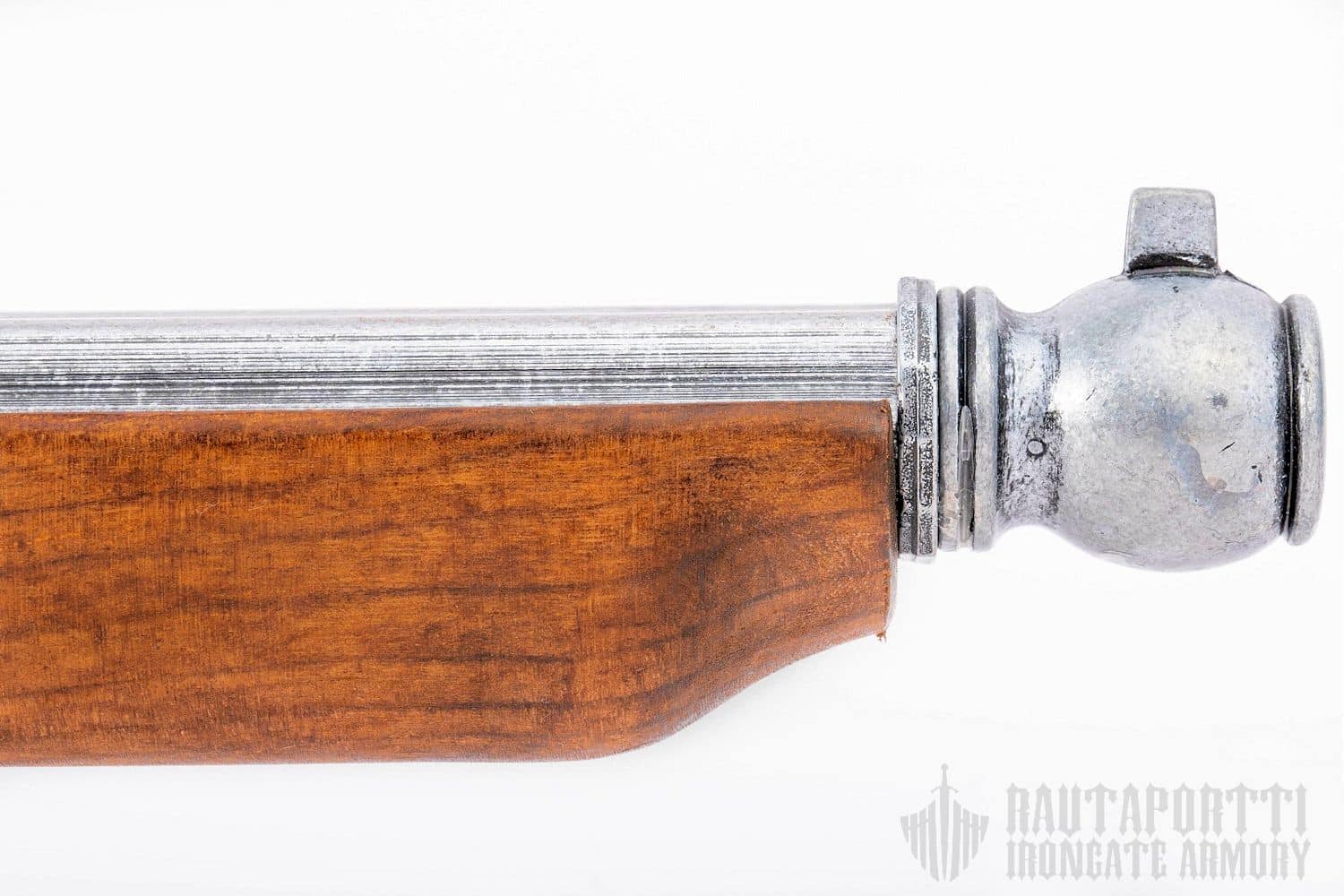
Tanegashima Matchlock Rifle, c.1600-1800 Japan
- Made of cast metal (zamak) and hardwood
- Can be dry fired like the original
- Non-firing replica. Legal and permit free in most countries
- Excellent for theater and film productions
159.90€
Sold Out
Description of the Product
Tanegashima was a type of matchlock firearm, introduced to Japan through the Portuguese. The name came from the Japanese island of Tanegashima, where Portuguese sailors anchored in 1543. The islanders then began copying the matchlock barrel and firing mechanism of the guns the Portuguese had brought with them.
The matchlock mechanism uses a smoldering charred chord, or a slow match, which is lowered onto the gunpowder in the flash pan with the use of a lever, or serpentine. Charcloth had long been used in conjunction with fire steel and flint to create fire, and it was used in the first hand-held firearms as early as the early 15th century. There were other drawbacks, other than the inevitable accidents, to using an open flame together with gunpowder. An inherent weakness of the matchlock was the necessity of keeping the match constantly lit, which was a problem in wet weather. The burning match would glow in the darkness, possibly revealing the carrier's position. The matchlock was also uneconomical to keep ready for long periods of time, as the match would get used up by the burning, especially as the match was often lit at both ends just in case. Despite the drawbacks the matchlock remained in use in muskets well into the 17th century.
Matchlock guns came to Japan during the Sengoku period, and they saw extensive use in the conflicts of that age. Within a few years of its introduction the gun changed the way war was fought in Japan forever, as learning to use it effectively was very quick, even for unskilled soldiers. All the major daimyo, or warlords, adopted them, starting with Oda Nobunaga, who already in 1549 ordered 500 guns to be produced for his armies. The new firearm had undoubted advantages in range, and bullets could penetrate almost any armor and shield. But the longbow (yumi) still continued to play an important part. In 1567, another daimyo, Takeda Shingen (the Tiger of Kai) announced that, "Hereafter, the guns will be the most important arms… have your most capable men carry guns". Oda Nobunaga used tanegashima for example against the powerful Takeda clan in 1575, when 3000 of his soldiers with guns helped win the battle, firing volleys of a thousand at a time. In 1584 the majority of the soldiers led by Date Masamune, a prominent samurai as well as daimyo, were armed with guns. Japan became so enthusiastic about the new weapons that it overtook every European country in absolute numbers produced. In the Japanese invasion of Korea in 1592 about a quarter of the invasion force of 160 000 were gunners.
Tanegashima were used by the samurai class as well as by their foot soldiers, ashigaru. During the relatively peaceful Edo period from 1603 to 1868 the use of tanegashima declined, as the period did not have many large-scale conflicts in which a gun would have been useful. Often the katana was simply the more practical weapon. With no external enemies for over 200 years, the gun became less a weapon and more a tool for scaring off animals. Tanegashima were mainly used by samurai for hunting and target practice, but the majority were relegated to the arms store houses of the daimyo. The last use of samurai armour and traditional weapons in Japan, including tanegashima, was during the Satsuma Rebellion in 1877, when the Meiji government put an end to the last samurai and their resistance to modernization.
This stunning non-firing replica of the Tanegashima matchlock rifle brings the spirit of 16th-century Japan into your collection. It faithfully reproduces the intricate design of the rifle that shaped the Sengoku period. Crafted from premium materials, it offers an authentic display piece without the need for live firing. Perfect for enthusiasts of Japanese history, this piece embodies the fusion of traditional craftsmanship and early firearm technology. Add a touch of samurai-era warfare to your collection!
A matching matchlock pistol is available -here-.
- This gun is an exact replica of the original. The replica matches the original in size and weight. The mechanisms of the weapon are working. The weapon can be dry fired like a real one. Due to the materials used, the mechanisms cannot withstand continuous firing for long periods.
- Genuine wood and cast metal has been used to make this replica weapon. Zamac differs from steel in many respects, so the structure of the gun does not withstand pressure, it cannot be used to fire bullets, nor can it be converted to a functional weapon by any means.
- Replica guns such as this do not require permits in Finland, nor in many other countries. However, since the gun looks real, it should not be carried in public.
- A replica gun is perfect for historical re-enactment, on a theater stage, in film productions, for collectors of historical memorabilia, and as decoration.
- Length: 110 cm
- Weight: 1,78 kg
- Manufacturer: Denix, Spain
Due to the nature of this item please read about shipping options/restrictions if ordering outside Finland. –More information about international shipping-

The best of the best!!! I am very pleased, all products are beautiful and of good quality!!!!
Customers who bought this were also interested in...


You may also like…


Products are located in our own storehouse
In Kaarina, Finland.
Fast shipping
Orders are shipped out within 24 hours of us receiving the order.
Purchase online or offline
You can also pickup your order at our store.

Flexible payments
We accept Credit Cards & Online Banks etc.
Our Store
All orders can also be picked up from the brick-and-mortar store at Oppipojankuja 1, 20780 Kaarina. 10min drive from the centre of Turku.
Welcome!
Reviews
There are no reviews yet.