
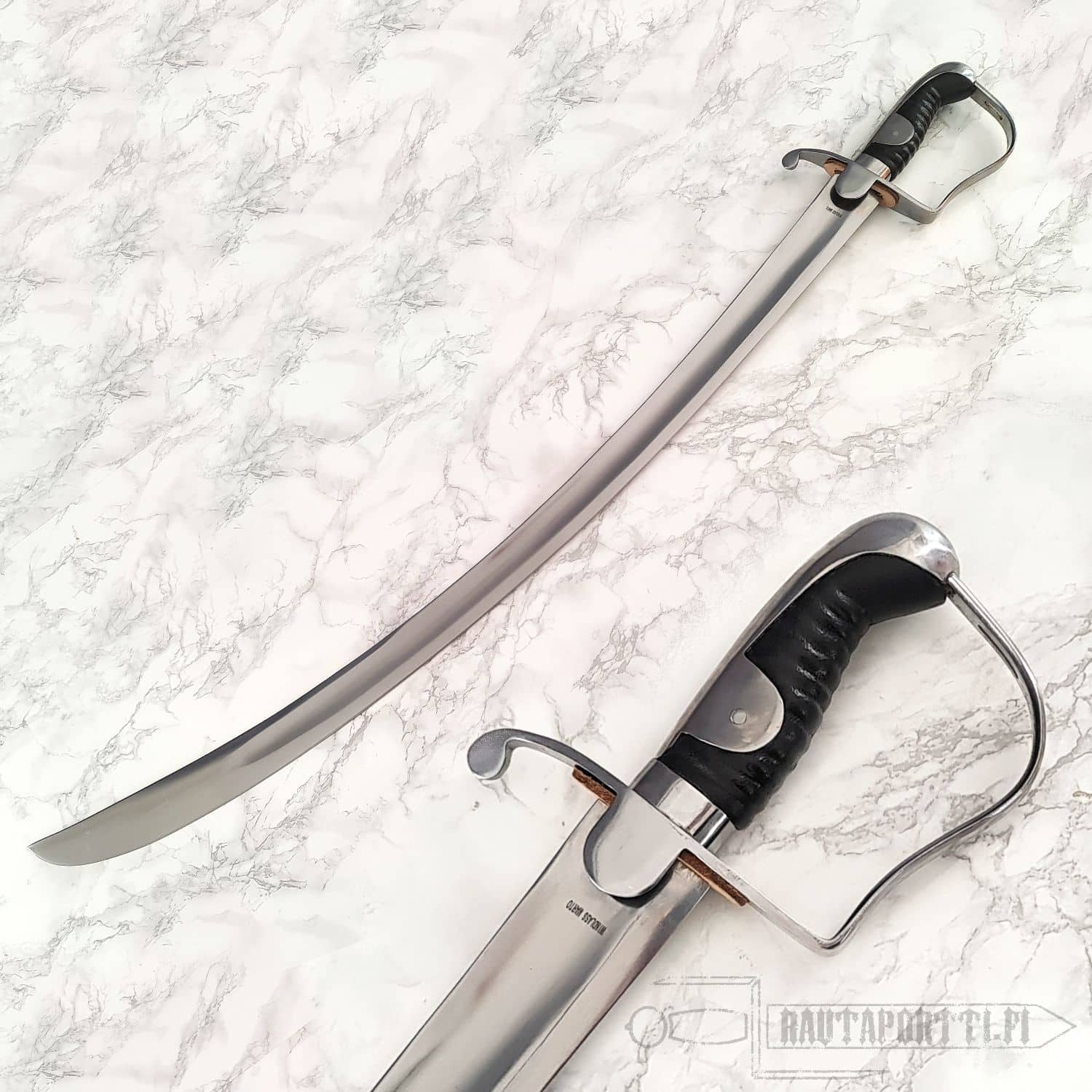
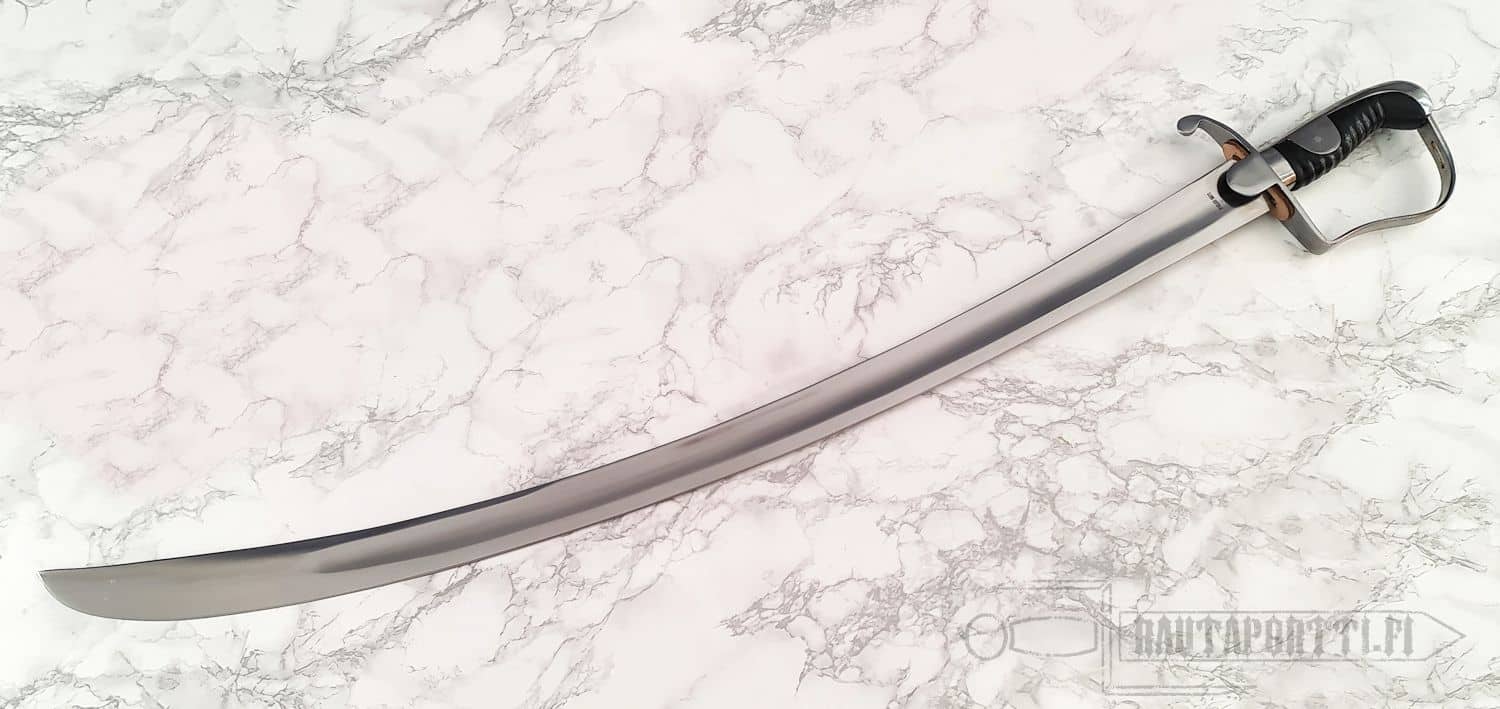
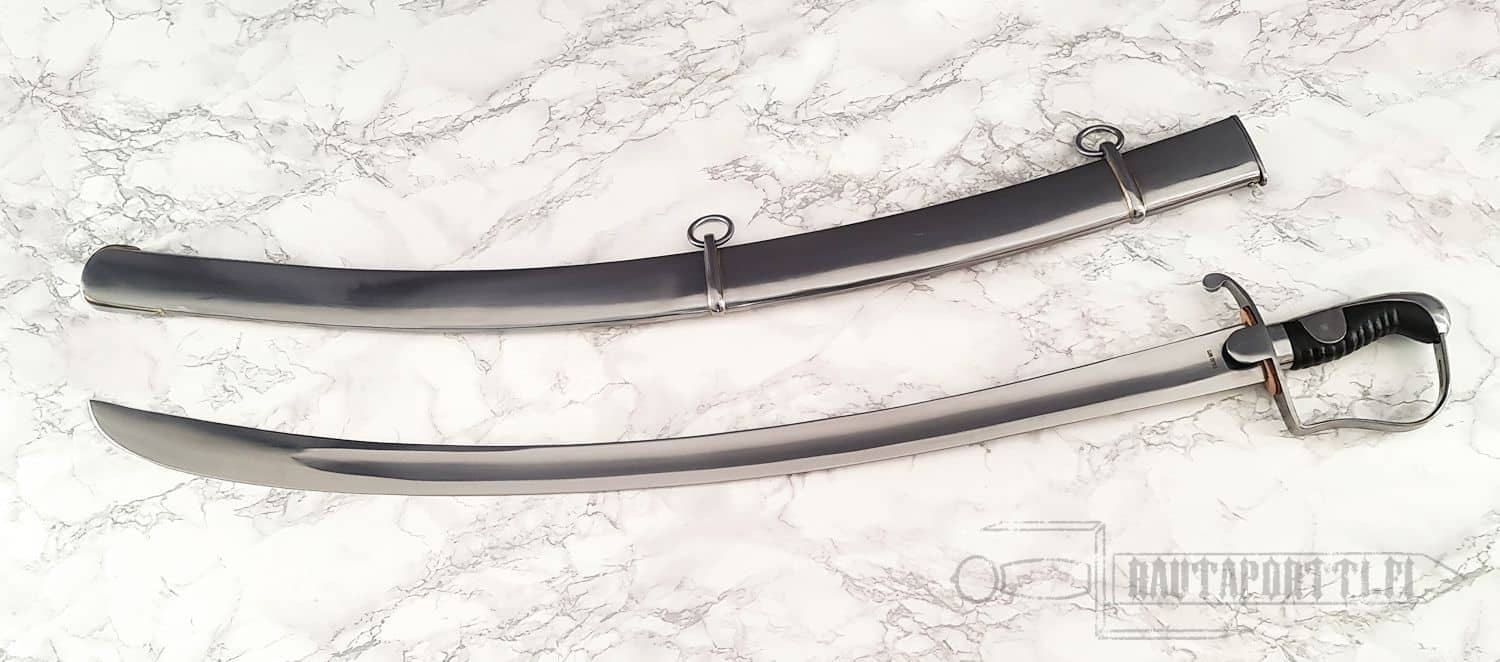
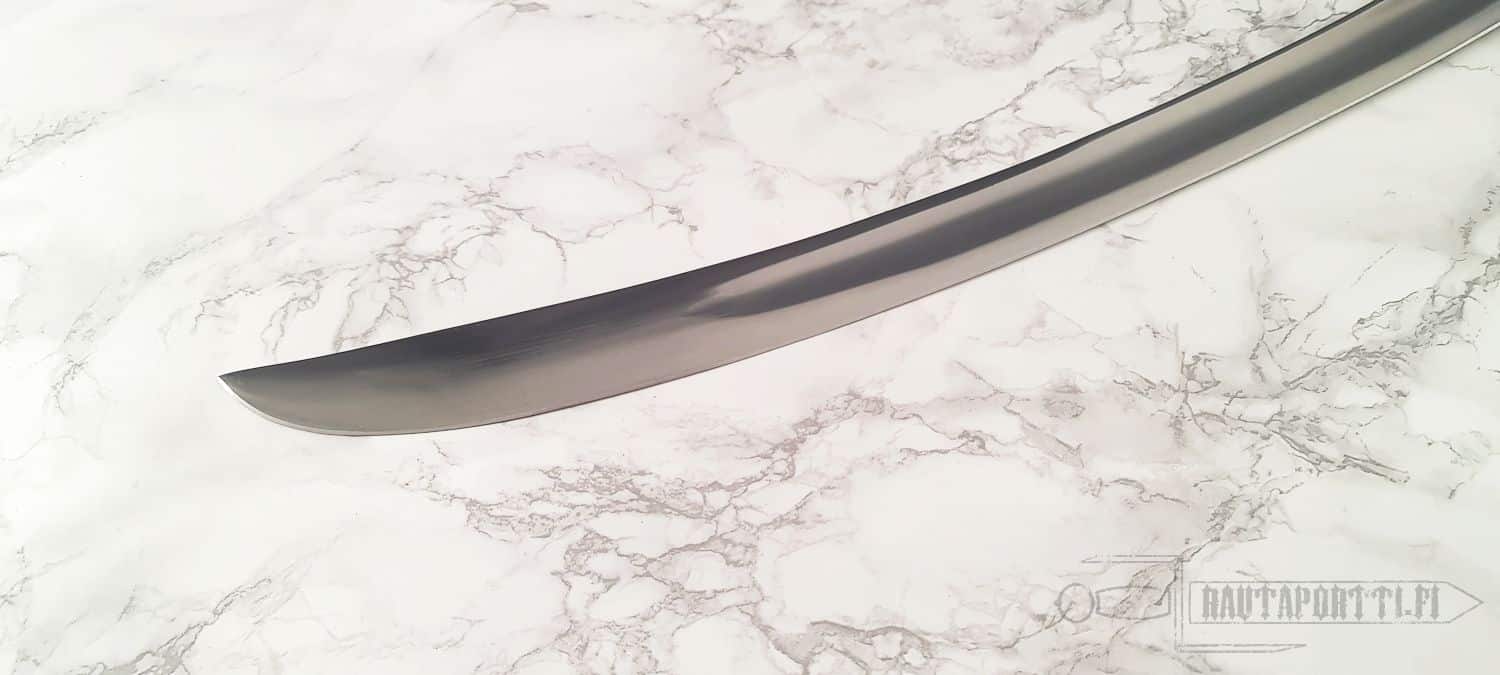
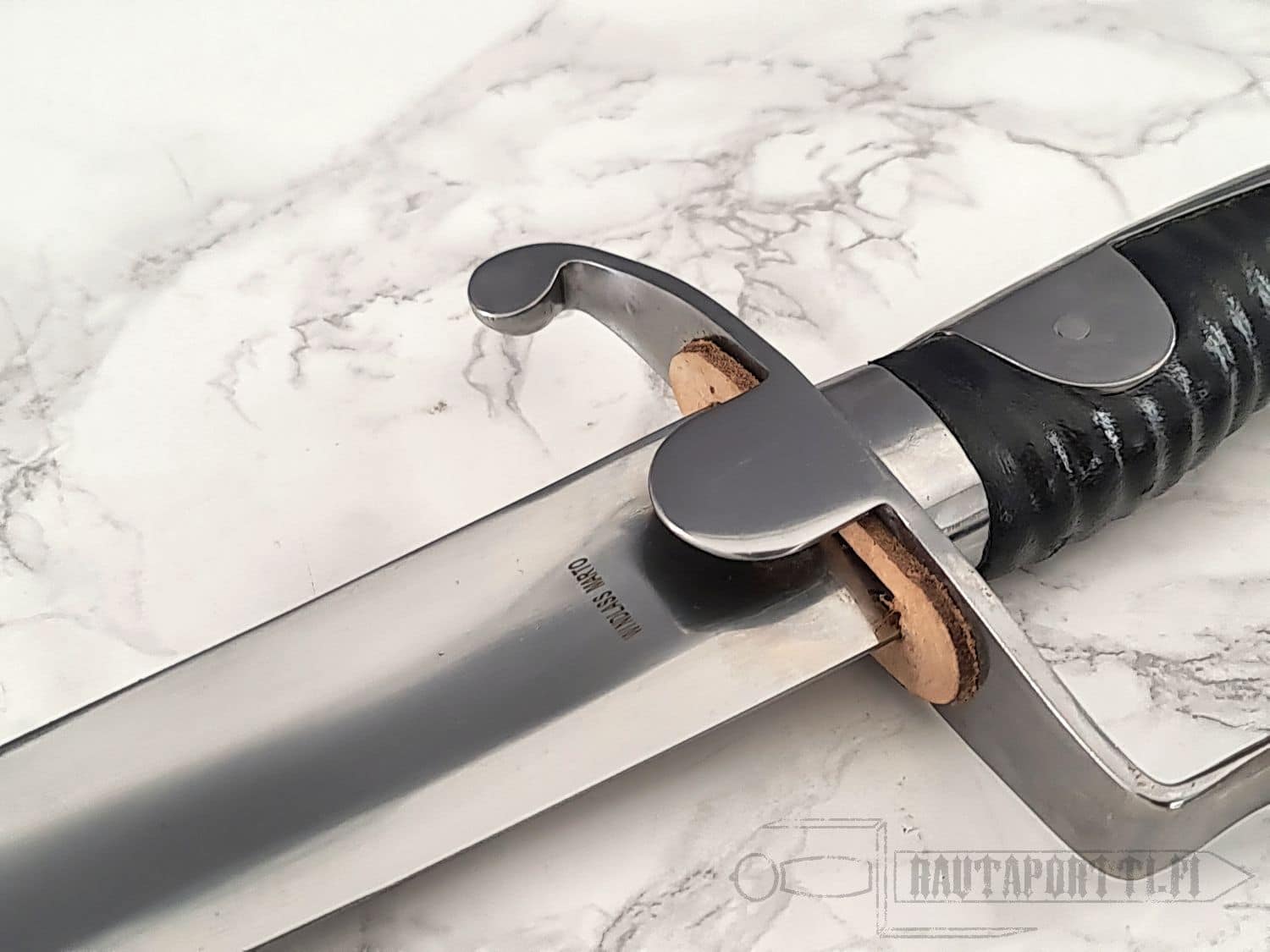
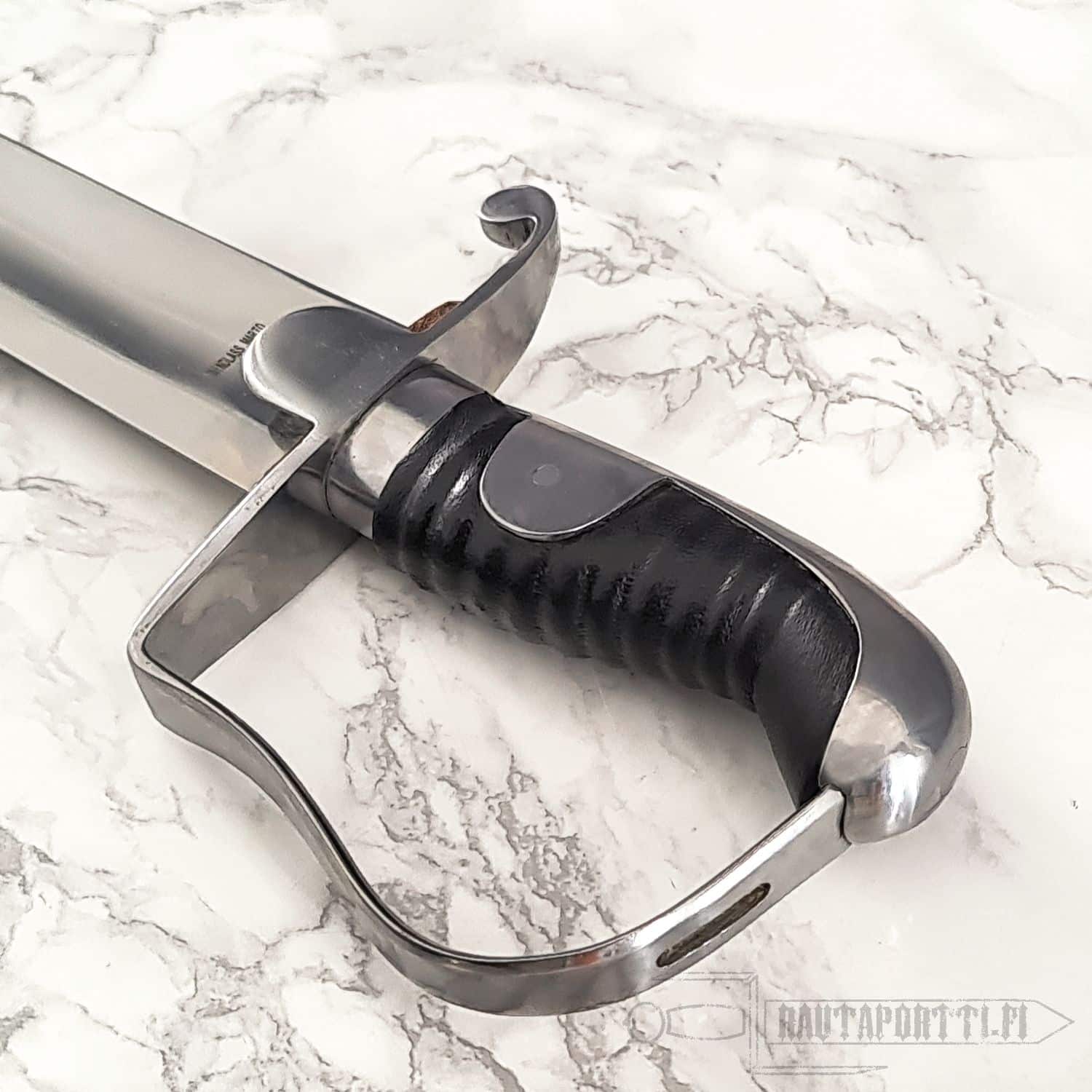
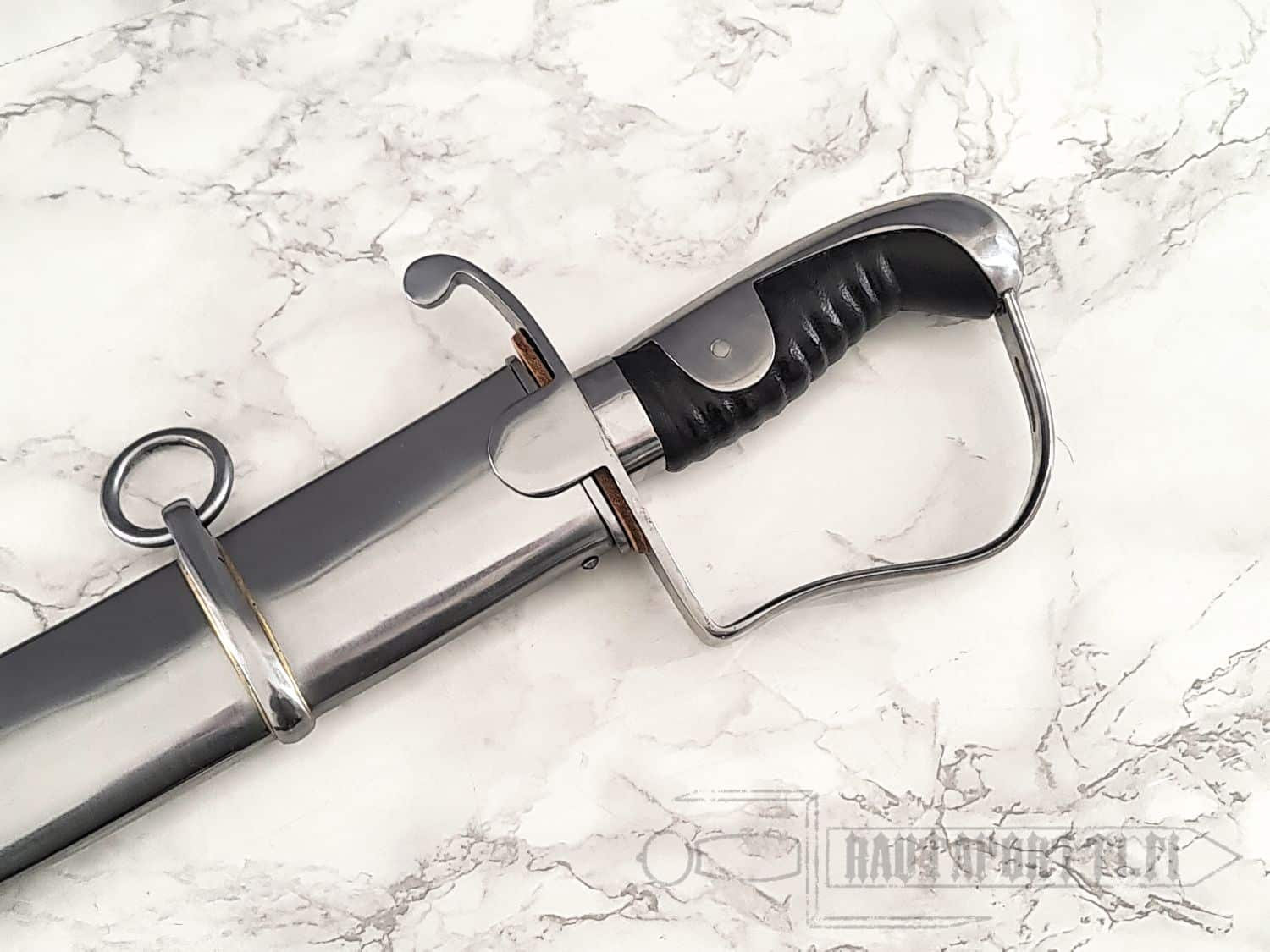
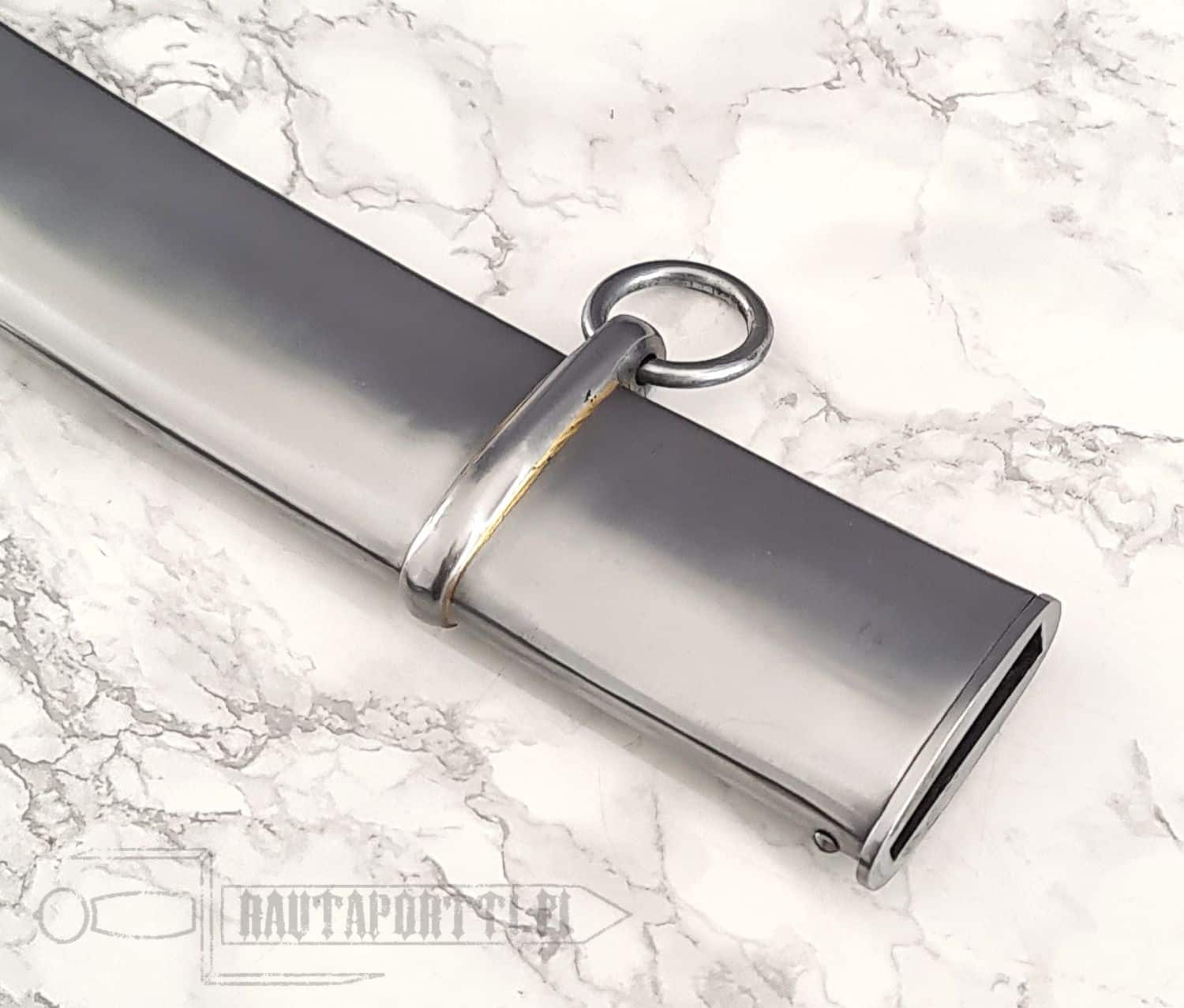
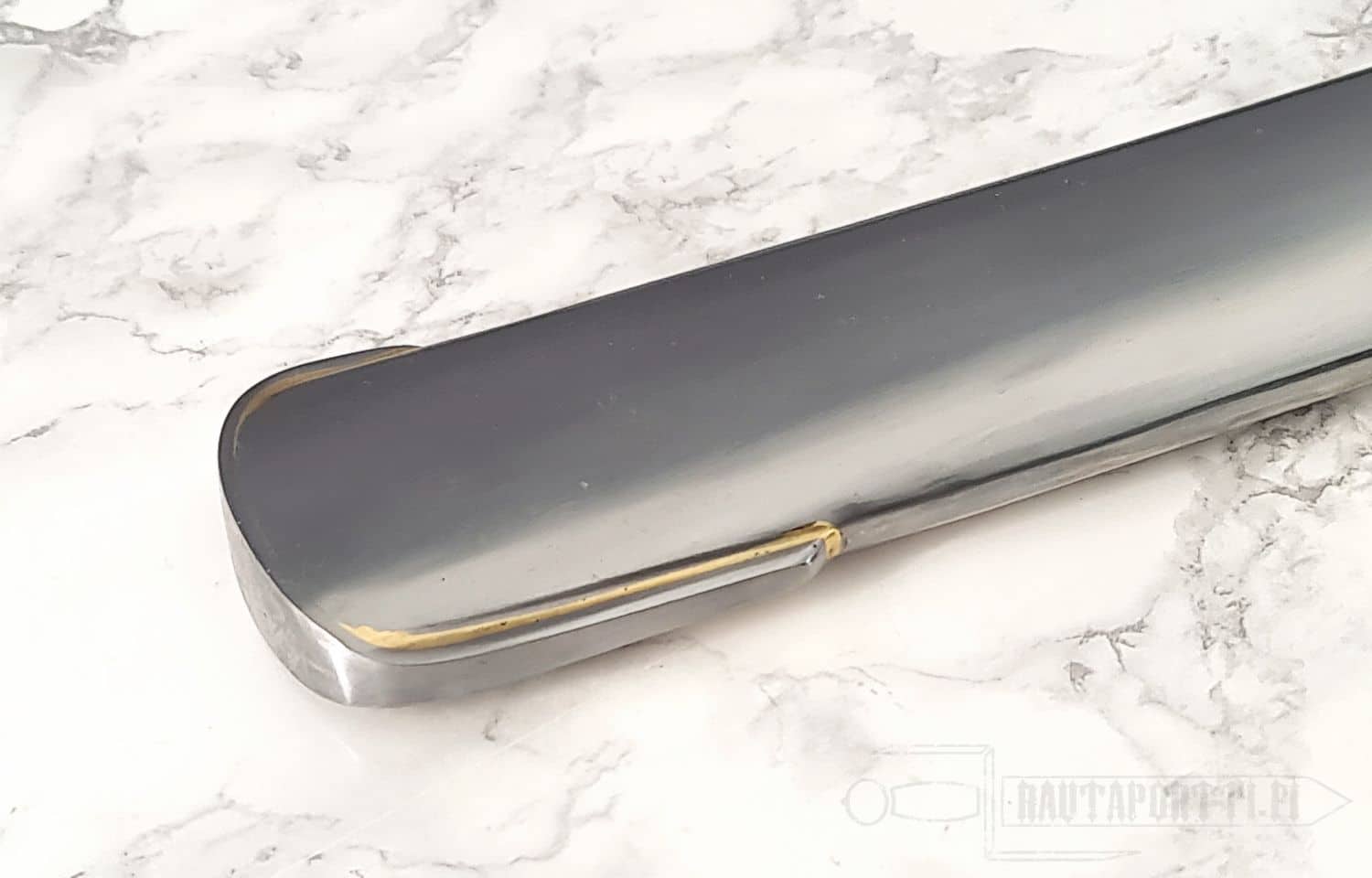
British 1796 Pattern Light Cavalry Saber
- Authentic replica of an iconic historical saber
- Very good balance and fully functional
- Overall length: 95 cm
- Weight: 820 g
- Blade material: 1080 carbon steel
- Sharpness: Sharp
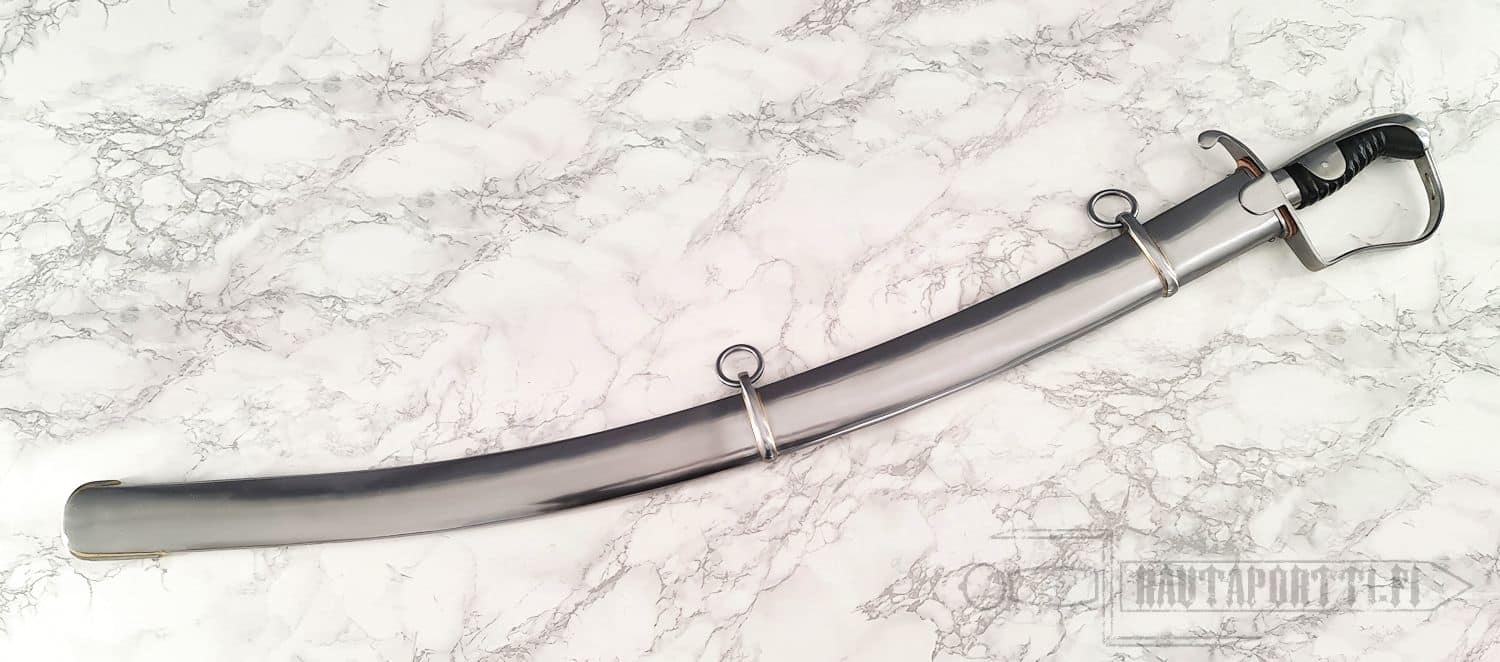
- Includes steel scabbard
319€
• Pickup: Immediately from store in Kaarina, Finland
Description of the Product
This is an exact replica of an original antique 1796 Light Cavalry Saber, one of the most iconic military swords ever produced. The saber remained in widespread service for over 25 years of almost continual war, and thousands were produced from 1796 to 1821. It was the most common pattern of combat sword used during the French Revolutionary and Napoleonic Wars.
The saber was designed by Major-General John Gaspard Le Marchant, based on Central and Eastern European hussar swords. As a young captain taking part in the French Revolutionary wars, he observed the clumsy design of the heavy, overly long 1788 Pattern swords. The British army was infantry-centric, and the cavalry had no standardized training, and as such they were hard to control once set loose. Many cavalry troops had only rudimentary training, both in riding a horse as well as in using a sword. To address the issue, Le Marchant designed a more appropriate blade, and also wrote a manual, “Rules and regulations for the sword exercise of the cavalry”. The new sword required little fencing skills, as it wasn’t a fencing sword, but it excelled in instinctual slashing and whacking. The British Pattern 1796 Light Cavalry saber was designed for a specific combat system, and both the sword and the system were developed by the same man, Le Marchant. Light cavalry was used mainly in skirmishes, disturbing the enemy, and in “hit and run” type maneuvers, so the sword was designed for that type of use.
Le Marchant gave the blade of his saber a pronounced curve, which made it more adept at cavalry attack methods, and designed it with a widened tip that affected the balance, making slashes far more brutal. There is very little tip for thrusting, unlike in the previous 1788 light cavalry saber. The 1796 saber is not a compromise between cutting and thrusting, but it is very clearly meant to excel in the one thing it was meant for, cutting. The mounted swordsmanship training of the British emphasized the cut, at the face for maiming or killing, or at the arms to disable. This left masses of mutilated or disabled troops. The French, in contrast, favored the thrust, which gave cleaner kills. The direction of the blow was, however, probably inconsequential for the person killed. A cut with the 1796 sabre was, however, perfectly capable of killing outright too. The saber was designed for a specific purpose, and to put it crudely, that purpose was slaughtering French infantry from horseback. It was reported that it inflicted such terrible wounds, that allegedly some officers protested its use as inhumane and barbarous.
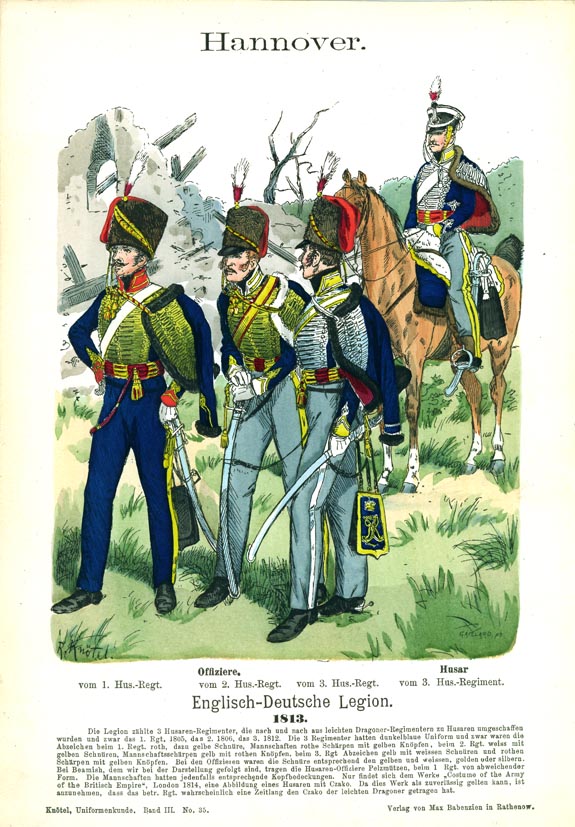
The 1796 saber was issued primarily to British light dragoons and hussars, and was also used by the light cavalry during the Napoleonic Wars. The Prussians, and other German states, were provided with military aid in their struggles against Napoleon. Great Britain especially was keen on supplying and selling arms and armaments to Napoleons foes, to the point that Napoleon called Britain a “Nation of Shopkeepers”, a polite way of accusing them of profiteering. The Prussians ended up liking the 1796 model so much, that it was adopted as the 1811 pattern cavalry, or "Blücher sabre", named after their most important field marshal. Some Imperial German troops were equipped with almost identical swords going into the First World War. The model was also used by Portuguese and Spanish cavalry, as well as the Americans, who also adopted a pattern which was directly influenced by the British sword.
The blade is remembered today as one of the best of its time and has been described as the finest cutting sword ever manufactured in quantity. Weighing only about 800 g, the blade features an extreme distal taper, enabling it to feel exceptionally lively. The blade is about 8,5 mm thick at the hilt, and tapers to a super thin 2 mm close to the tip. The fuller has an accurate width and depth. The saber has a hatchet tip, which is not designed for thrusting, but it does mean that the full of the blade is available for cutting, slashing and chopping. The blade is hand forged from tough 1080 high carbon steel, spring tempered, and hardened to c. 50HRC. It ships fully sharpened. The hilt replicates the original, with a 16 mm wide knuckle guard, a steel spine, and contoured, ribbed leather grip. The pommel is peened, and there is a lateral rivet going through the ears of the steel spine, making it very robust. The rivets have been polished flat. The saber comes with an accurately reproduced steel scabbard.
- Iconic historical saber that stayed in use from the French Revolutionary Wars and the Napoleonic Wars till World War I
- Overall Length: 95 cm
- Blade Length: 82,4 cm
- Point of balance: 18,6 cm from the guard
- Blade Width: 4,29 cm at the ricasso, 3,28 cm at 40mm from the tip
- Blade distal taper: 8,44 mm thick at the hilt, 2,14 mm at 40mm from the tip
- Blade material: Spring tempered 1080 high carbon steel
- Rockwell hardness of blade: 50 HRC
- Blade Edge: Sharp
- Weight: 820 g
- Manufacturer: Windlass Steelcrafts
2 reviews for British 1796 Pattern Light Cavalry Saber

Customer service is like the good old days, real people, very efficient, very fair. And they have LOTS of amazing gear for sale. Cheers and thank you Rautaportti!!!
Customers who bought this were also interested in...


Products are located in our own storehouse
In Kaarina, Finland.
Fast shipping
Orders are shipped out within 24 hours of us receiving the order.
Purchase online or offline
You can also pickup your order at our store.

Flexible payments
We accept Credit Cards & Online Banks etc.
Our Store
All orders can also be picked up from the brick-and-mortar store at Oppipojankuja 1, 20780 Kaarina. 10min drive from the centre of Turku.
Welcome!
Francis –
arrived reasonably fast, well packaged.
metal sheath and sabre greased.
pretty sharp blade as advetised.
however some light scratches on the blade.will probably have to polish.
all in all good product.
Eino Laitinen (verified owner) –
Erittäin hyvin leikkaava ja kaunis sapeli. Ainoat miinukset ovat miekan tupen kaulassa sisäpuolella käytetyt muoviset välyspalat ja miekan kahvan puu ja nahka osien sovitus metallisen selkäosan kanssa. Pidemmän päälle arveluttaa kestääkö puu ja nahka paikallaan vai löystyvätkö käytössä koska niiden sovitus metalliin ei ole aivan täydellinen. Hintaisekseen erittäin hyvä miekka leikkausharjoituksiin ja seinälle koristeeksi.