
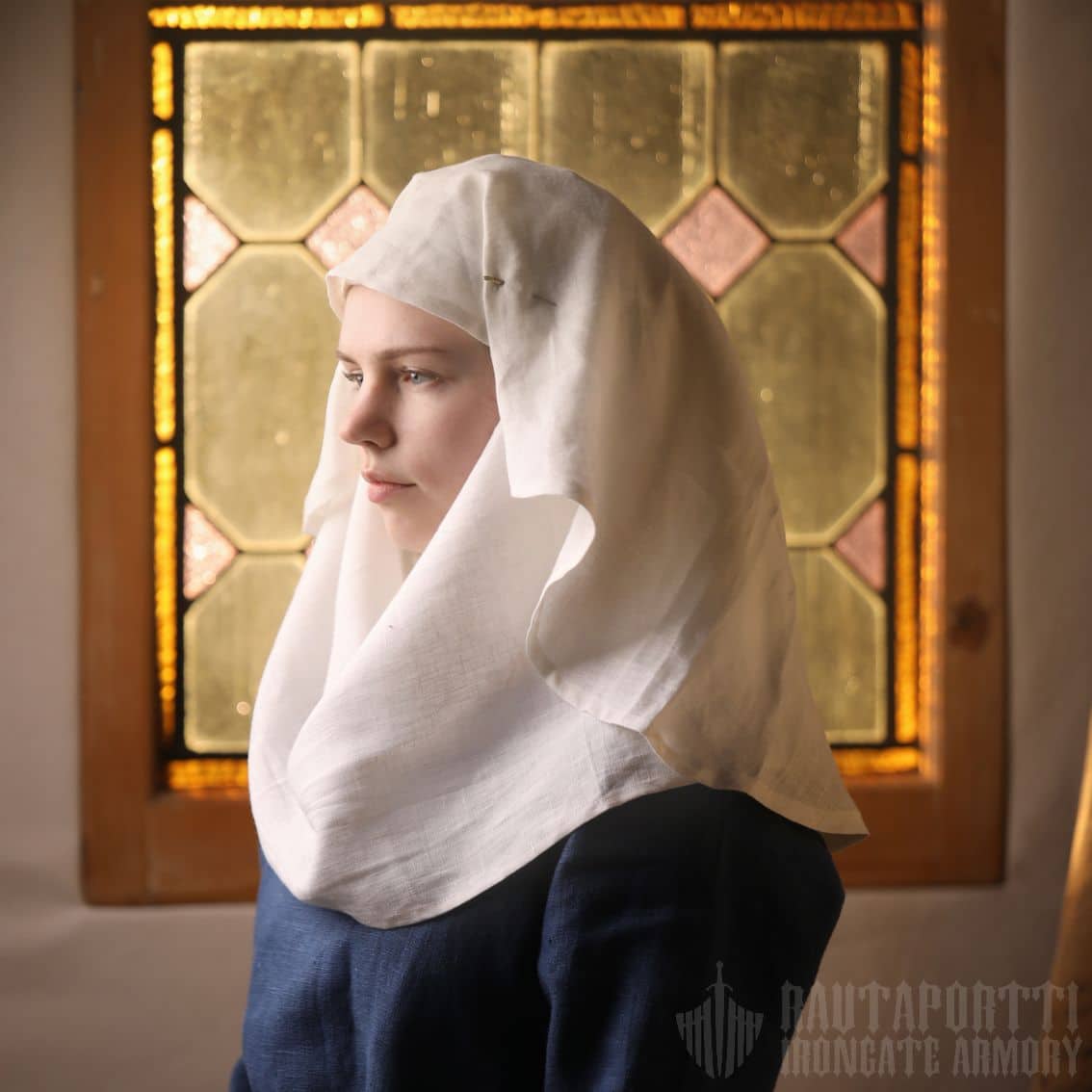
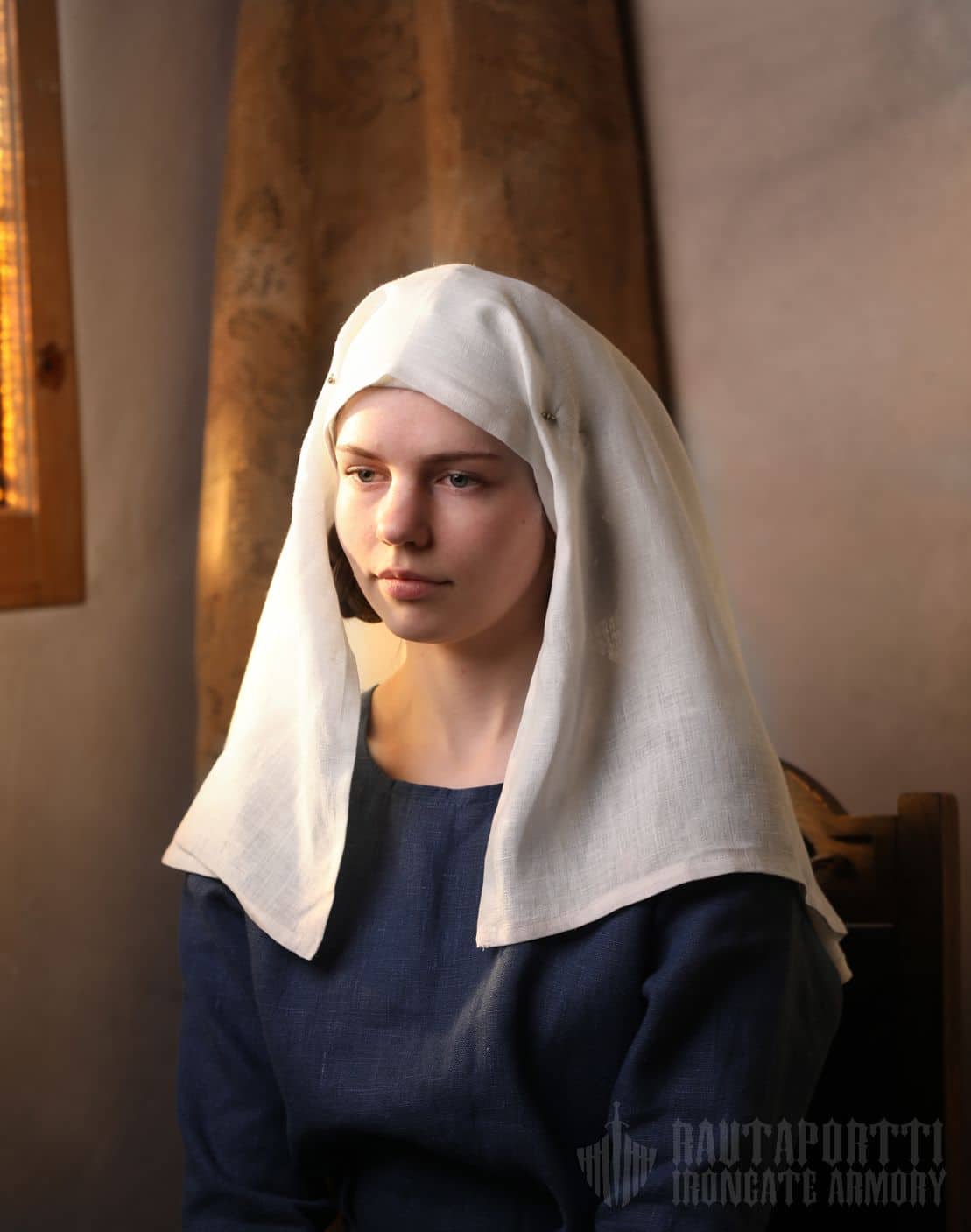
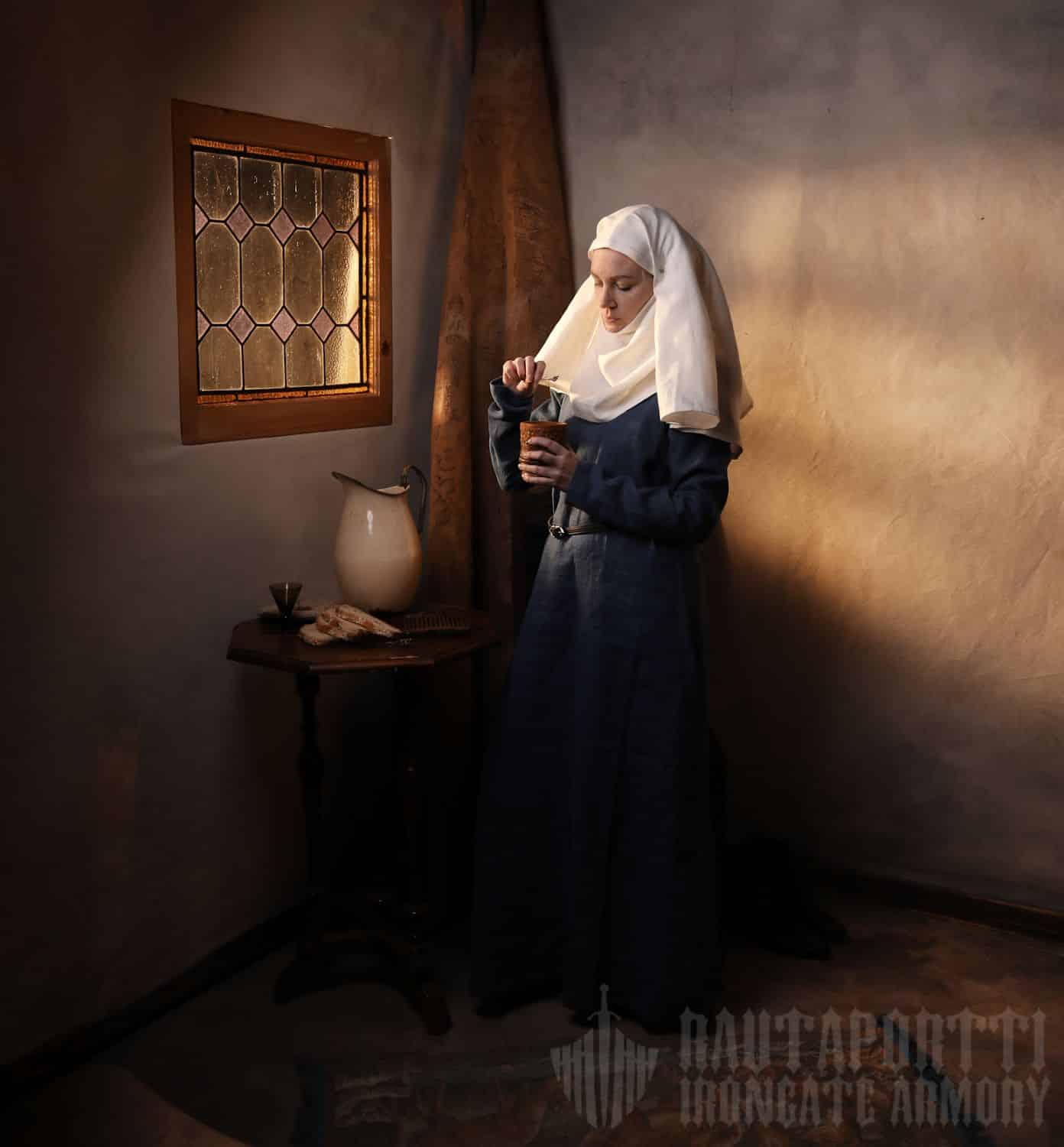
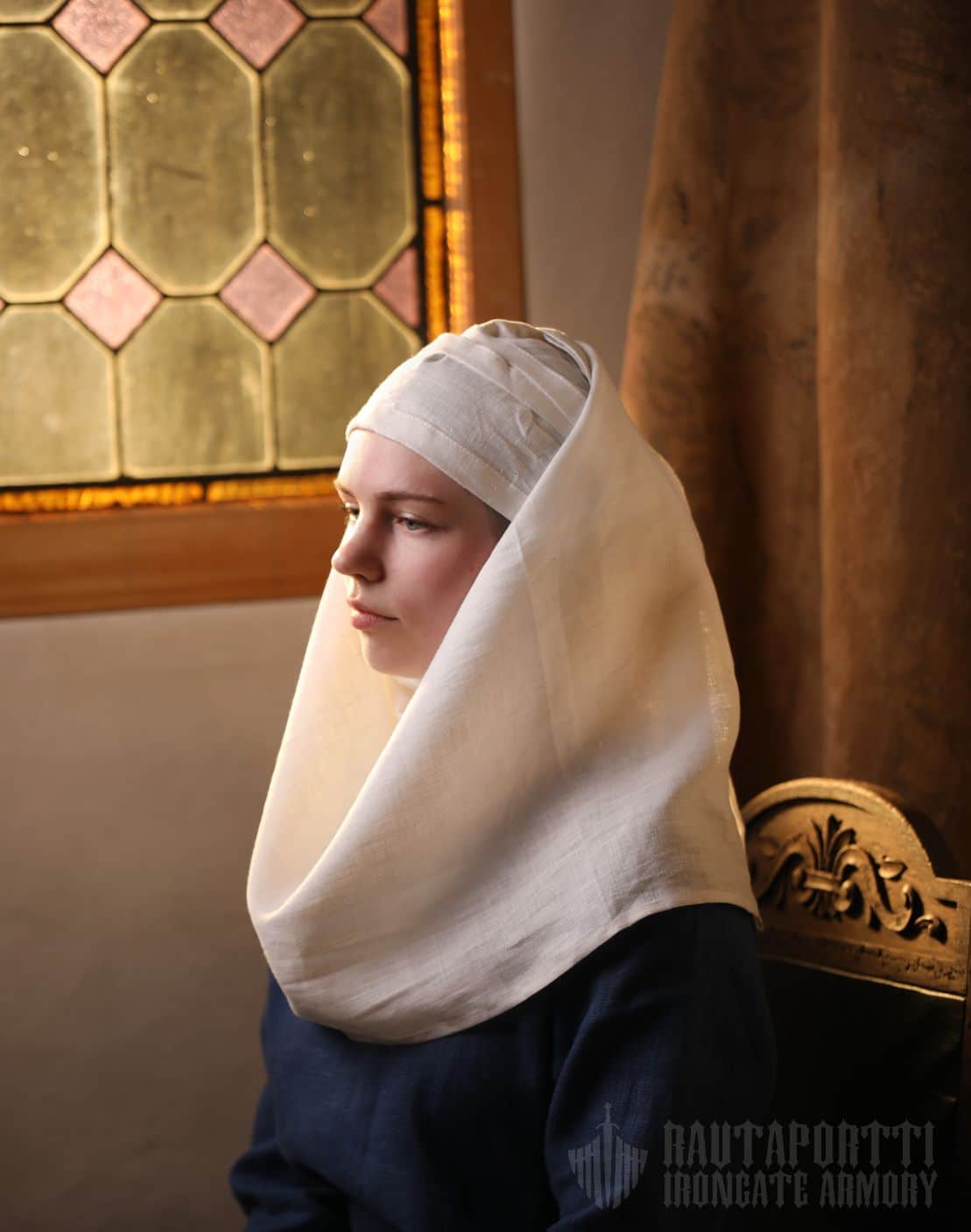
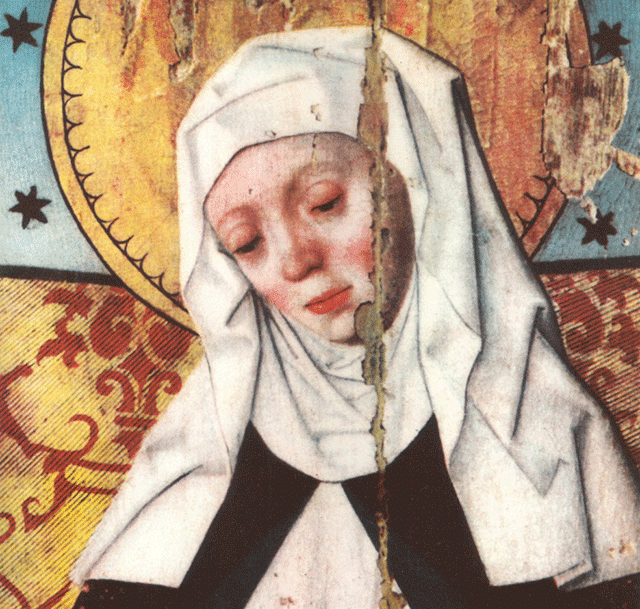
Medieval Rectangle Linen Veil / Wimple
- 100 % linen
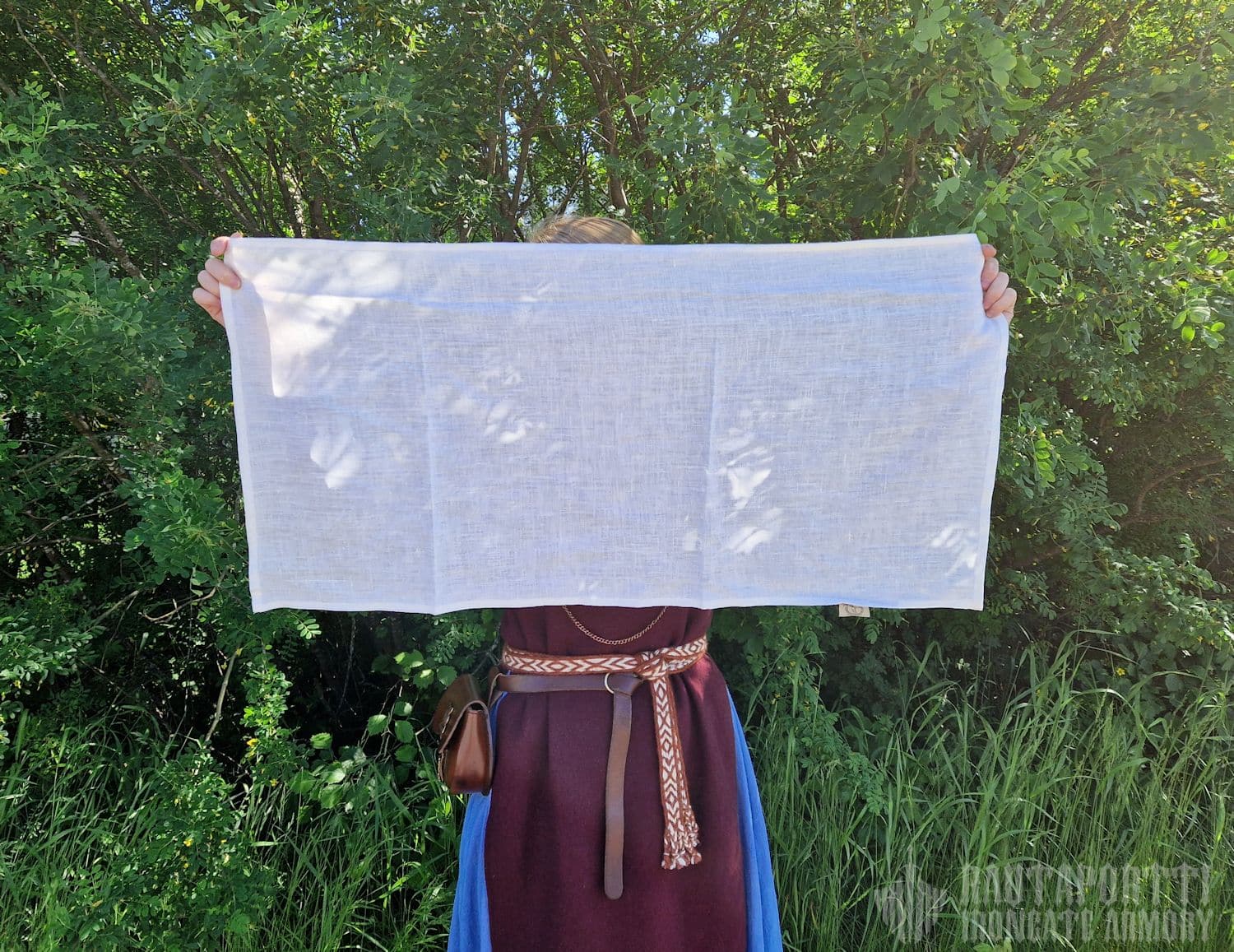
- Size of the wimple c. 45 cm x 90 cm
- Use as a wimple, or together with a cap and other veils for many varied styles
15.50€
• Pickup: Immediately from store in Kaarina, Finland
Description of the Product
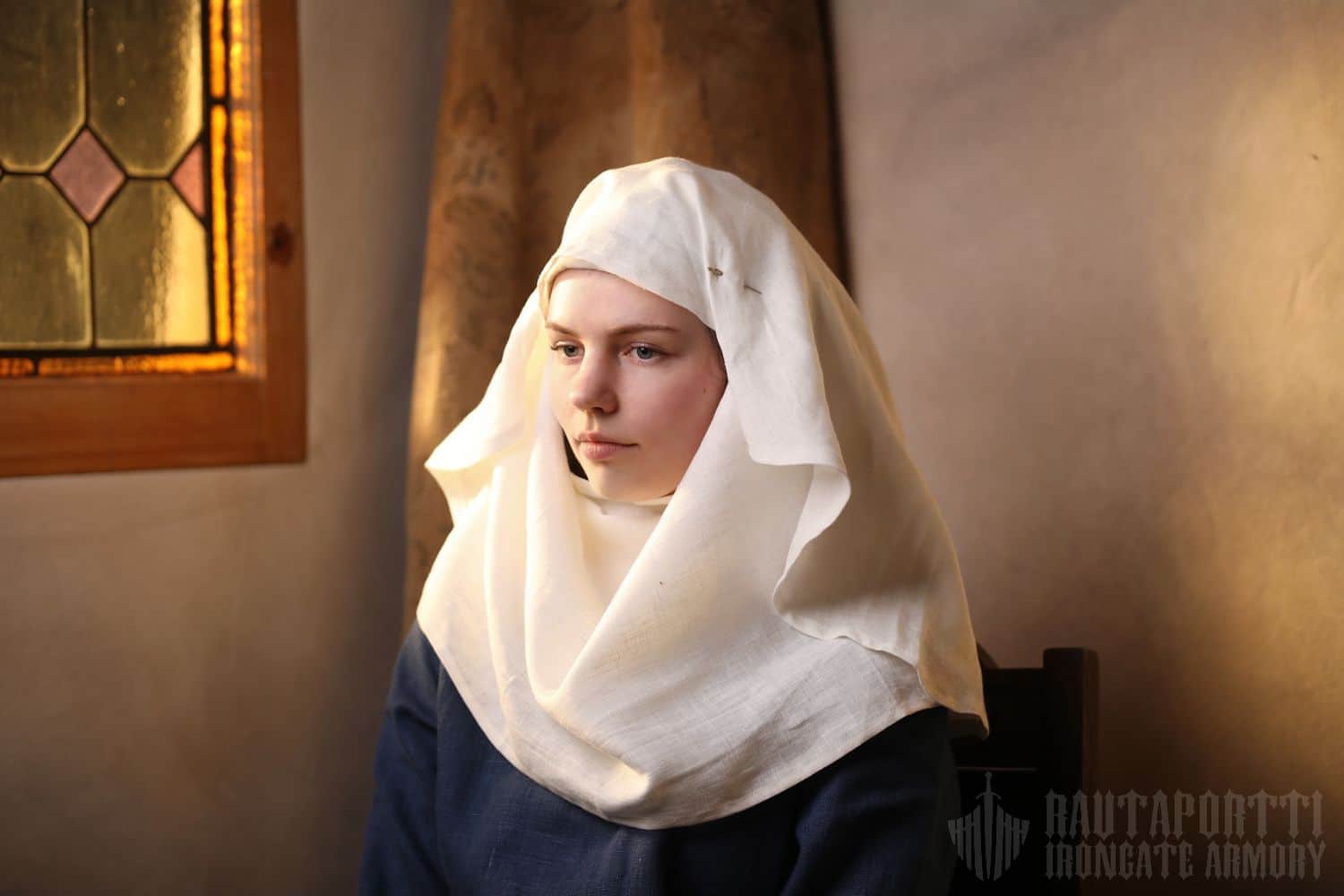
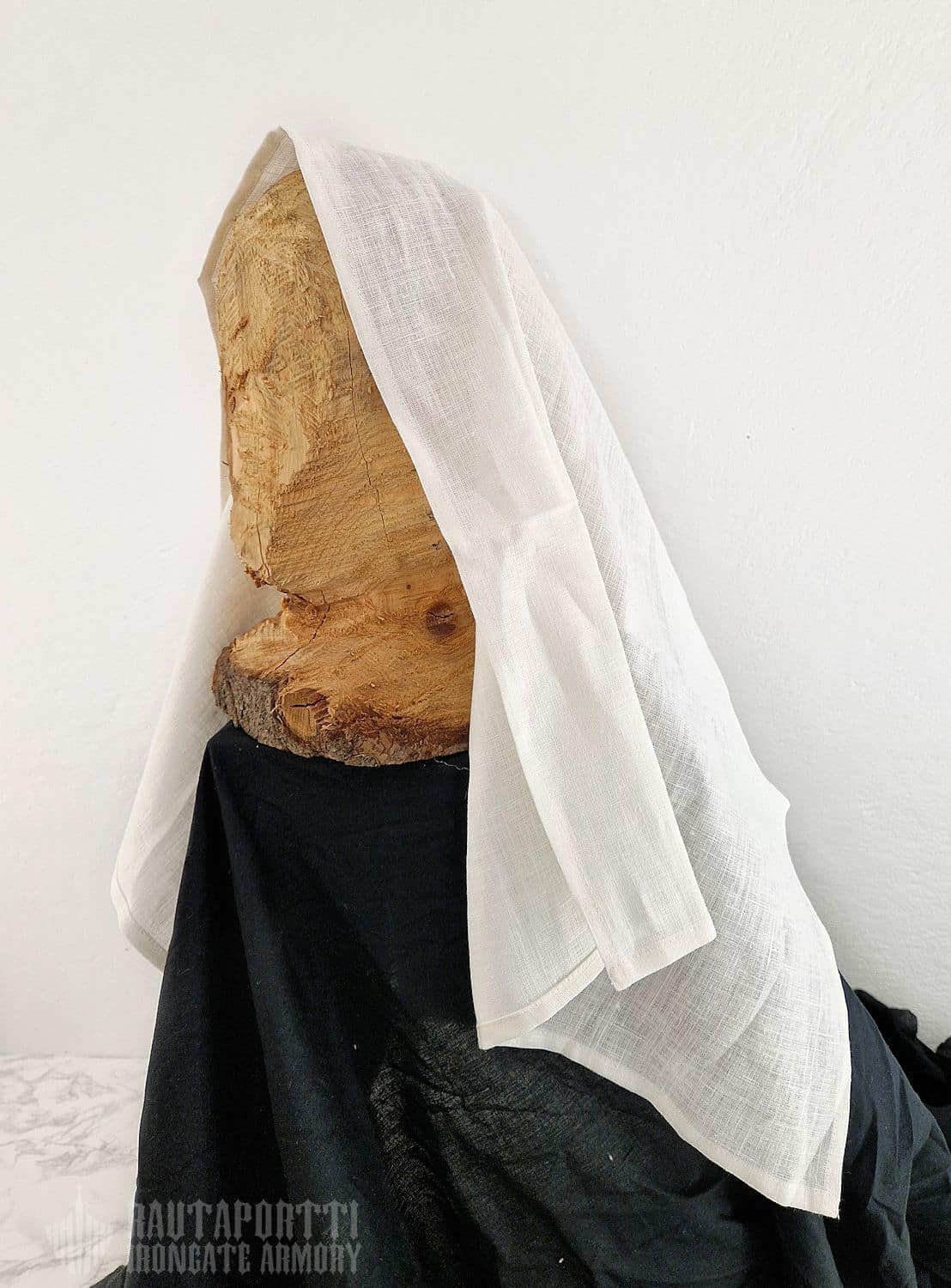
This rectangular piece of cloth is made of linen fabric and features rolled hems. It can be tied as a so-called wimple or as a headscarf for medieval reenactment, but is also versatile in modern everyday life. It can be worn as a stylish hair band, a turban, a shawl draped over the shoulders or a scarf elegantly wrapped around the neck.
In the Middle Ages, married women were expected to wear a headdress (hence the German expression unter die Haube kommen, which literally translates to "coming under the bonnet" and is still a common idiom today for "getting married"). In medieval times, there were many different ways for women to cover their heads, for example with a plain or frilled/goffered veil (with or without gorget around the neck), a bonnet, a coif, a barbette and fillet, a schapel (a decorated, crown-like hoop/wreath often worn in combination with a veil), or a wimple.
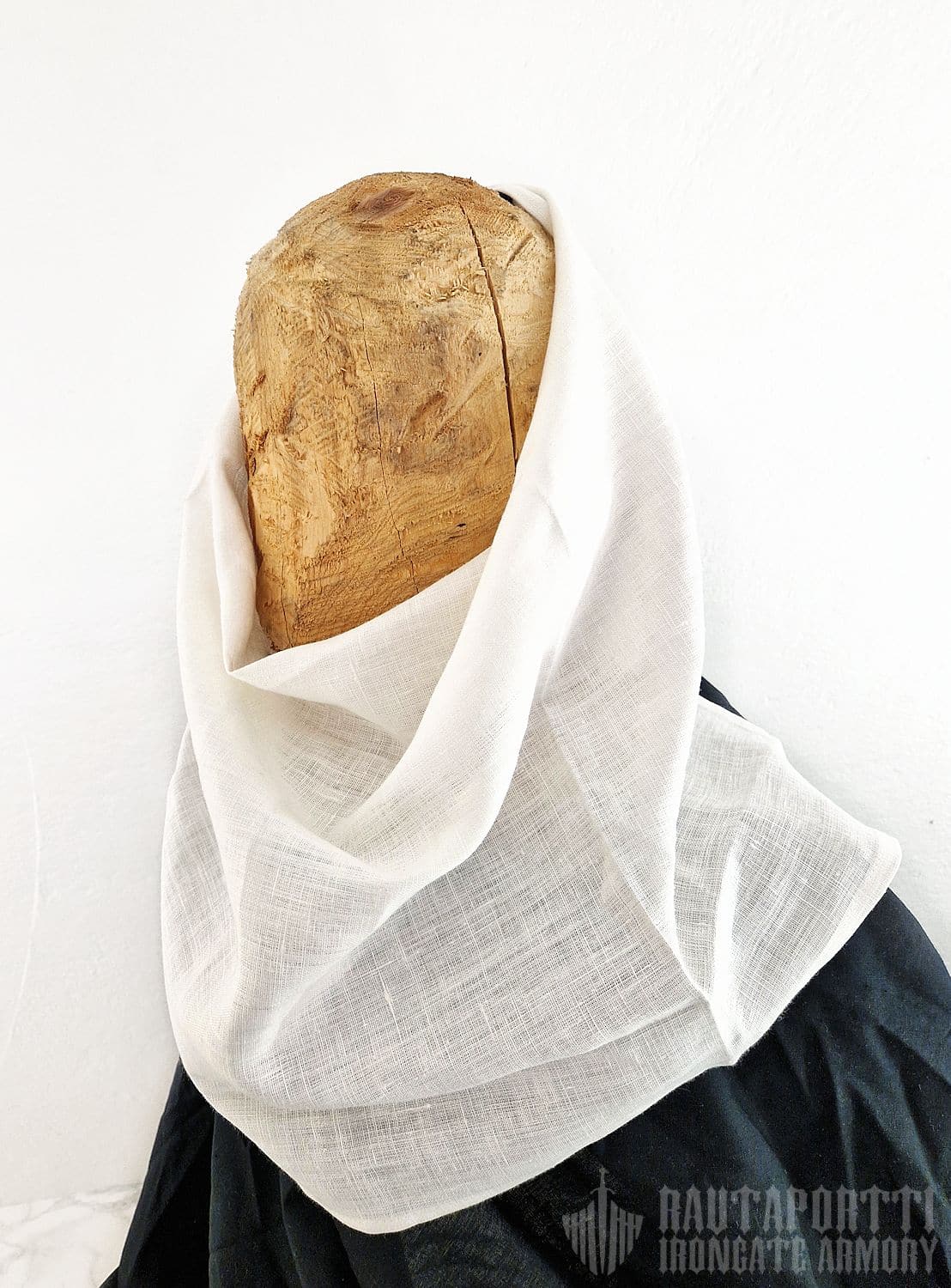
There were various methods to tie a wimple, but it was generally bound around the forehead, the chin and the back of the head and always concealed the hair. Historical illustrations of wimples can for example be found in the Weltchronik - Der Stricker - Karl der Große , an illuminated parchment manuscript from around 1300, or in the Morgan Bible (also known as the Maciejowski Bible or Crusader Bible), a picture bible from the 13th century.
Linen textiles are one of the oldest fabrics mankind has used, maybe the oldest. Linen is textile made from flax plant. Wild flax was made into textiles already 36 000 years ago in Europe and the plant was domesticated and extensively grown and used in ancient Mesopotamia. Linen was the most widely used fabric also in ancient Egypt. The use and cultivation of flax moved northward in Europe and linen clothing was available throughout Europe all the way to the cold north by late Bronze Age. Flax was grown locally in Scandinavia during the Viking Age and linen was an important commercial good. During the Middle Ages Germany was the main hub for growing flax and fabricating linen in almost an industrial scale.
This linen veil is thin and soft to the touch, and it drapes beautifully, but is still durable and breaths very well. Linen is naturally absorbent and dries faster than cotton. Baltic linen is grown in the Baltic and Nordic countries where long cold winters around the Baltic Sea make this plant and its fibers strong and durable. Properties that our ancestors appreciated.
This rectangular veil can be used by itself as a wimple, or combined with a St. Birgitta's Cap worn underneath (available -here-). It can also be used as a gorget, as shown on the video below. The oval veil worn on the video and some pictures is available -here-. The veils can be attached with brass veil pins, available -here-.
- Made of 100% Baltic linen
- Rectangular 45cm x 90cm size
- Can be used as a wimple, or together with a cap and other veils
- Made by: Karhunhammas - Beartooth

An impressive quality, the shipment took 6 days to Spain but it is very cheap, it is worth it. The customer service is good (they answer emails).
Customers who bought this were also interested in...



Products are located in our own storehouse
In Kaarina, Finland.
Fast shipping
Orders are shipped out within 24 hours of us receiving the order.
Purchase online or offline
You can also pickup your order at our store.

Flexible payments
We accept Credit Cards & Online Banks etc.
Our Store
All orders can also be picked up from the brick-and-mortar store at Oppipojankuja 1, 20780 Kaarina. 10min drive from the centre of Turku.
Welcome!
Reviews
There are no reviews yet.