
Sword of Sir Francis Drake
- Francis Drake was a privateer who plundered Spanish ships and colonies in the late 1500’s
- He rose to the rank of vice admiral in the English navy, defeating the Spanish Armada
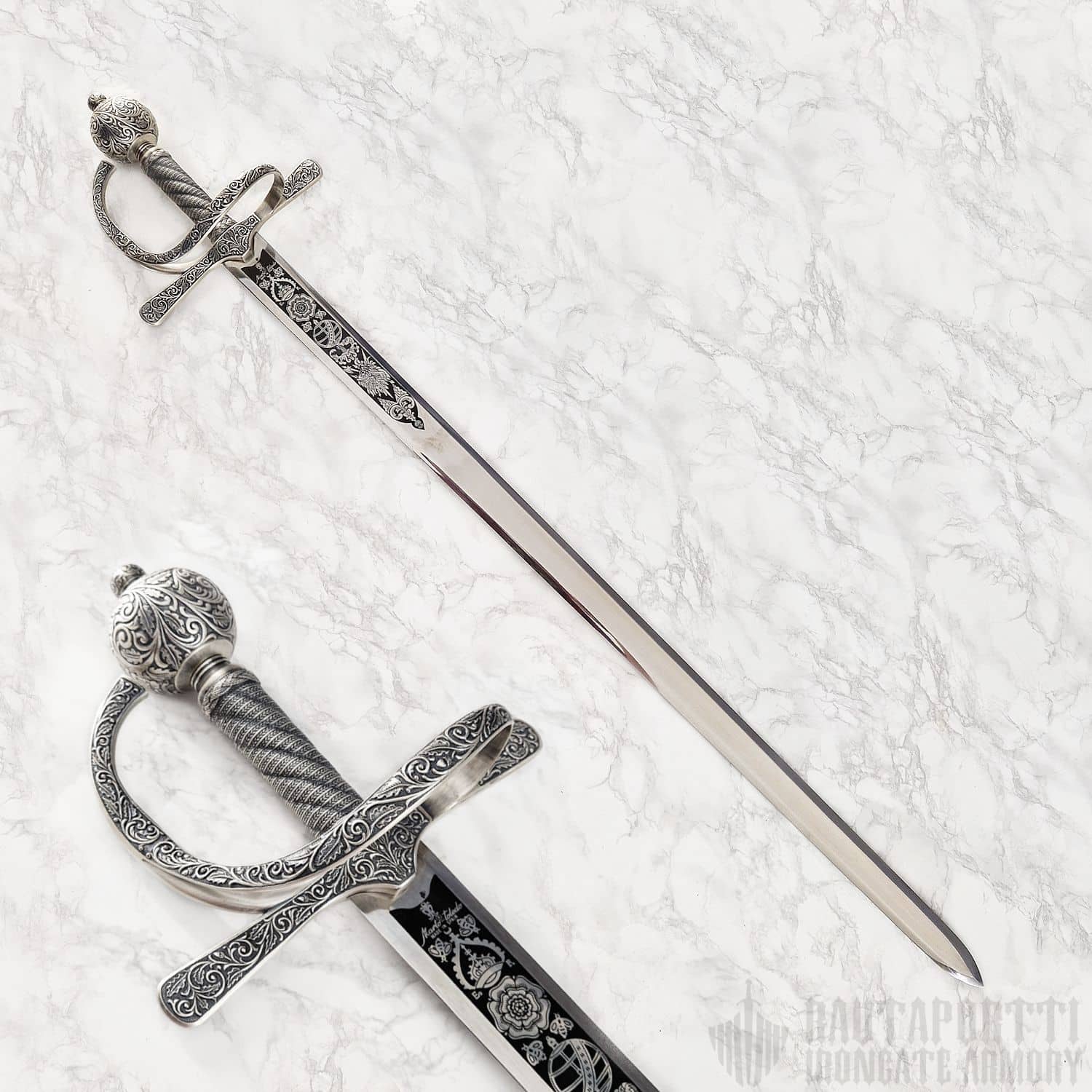
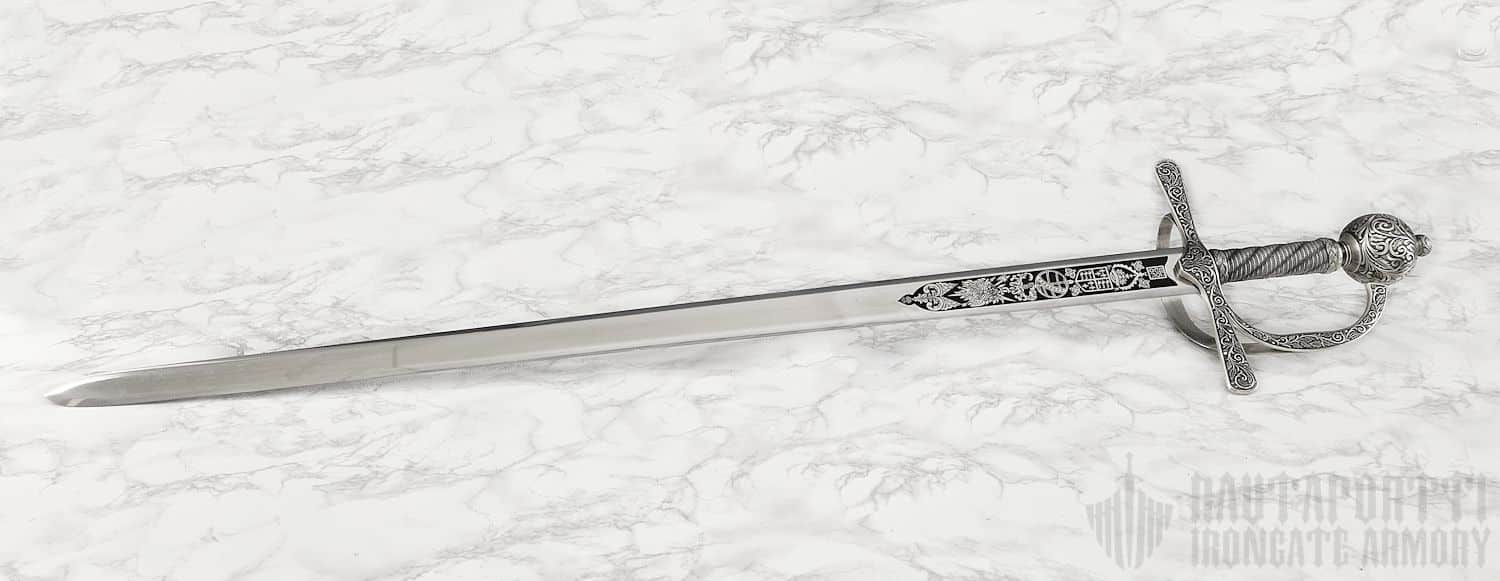
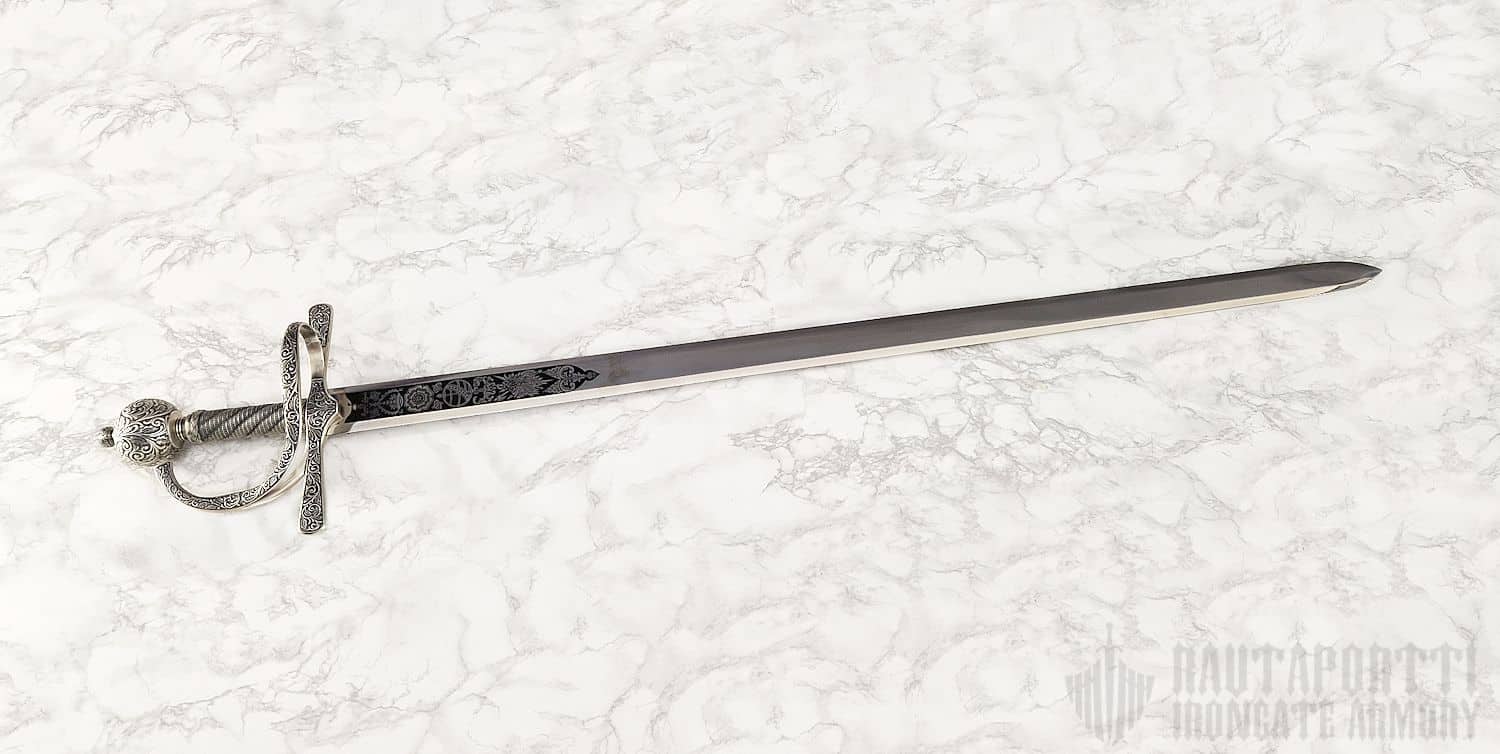
- Sir Francis Drake was given this sword by Queen Elizabeth I
- Overall length: 102,9 cm
- Weight: 2,18 kg
- Blade material: 420 Stainless Steel
- Sharpness: Unsharpened
195€
• Pickup: Immediately from store in Kaarina, Finland
Description of the Product
Francis Drake was the first Englishman to see the Pacific Ocean, to circumnavigate the globe, as well as one of the first English slavetraders. He came from a relatively humble background, and was already away at sea in his youth. In those days the line between a merchant and a privateer was thin, and Drake often behaved in a pirate-like manner. His privateering attitude came in handy, not to mention profitable, during the cold war between England and Spain in the late 1500’s. The Spanish opinion of Drake was that “he is the main cause of wars.”
After having successfully plundered many of the Spanish colonial settlements on the Atlantic side of America, Drake developed a plan to do the same on the Pacific Coast of the New World. Although not officially on state business, Queen Elizabeth I most likely commissioned him in secret. His voyage from 1577 to 1580 was a resounding success; he circumnavigated the globe, wreaking havoc in Spanish colonial ports and capturing loot whilst doing so. Some of his actions proved to have more long term ramifications than others: having sailed to the Pacific via the Magellan strait he came ashore to what he called Nova Albion (New Albion, New England) close to modern day San Francisco, California, and claimed the area for Queen Elizabeth I. This seemingly innocuous claim of land on the Pacific coast became the basis for later English claims of sovereignty from sea to shining sea, from their Atlantic colonies to the Pacific. Drake’s ship, Golden Hind, returned to England in 1580 with such riches as never seen. Half of the cargo belonged to the queen, and that value was greater than the rest of her combined income for that year. No wonder then that Drake was celebrated, became a favorite at the queen's court, and was knighted.
The war between Spain and England went from a cold war to a hot one in 1585. As a defender of the Catholic Church king Philip II of Spain was eager to suppress the rising Protestant tide in the north. The war between England and Spain also had a familial aspect: Philip had been married to Elizabeth’s half-sister and predecessor, queen Mary. The marriage of Philip and Mary had been widely unpopular with the English; there were fears that England would lose its independence in the Habsburg empire, and Protestants feared the restoration of Catholicism and the Inquisition. With the marriage Philip became king of England, but new legislation ensured that all his titles were for Mary's lifetime only. The short marriage produced no children, and the Catholic counter-reformation of Bloody Mary and Philip proved short-lived. After Mary’s death Philip proposed to marry Elizabeth, but was duly refused. Instead of marrying a catholic king, Elizabeth restored the Church of England, now that she didn’t have to hide her Protestantism anymore in fear of her sister.
The final straw that made Philip vow to invade England and force a Catholic monarch on the throne was the execution of Mary, Queen of Scots in 1587. Mary had been forced to abdicate the Scottish crown in favor of her one-year-old son, the future James VI of Scotland and I of England. She had then sought refuge from her cousin, Elizabeth I of England, but as a legitimate, and catholic, rival for the English throne, Mary posed a threat, and she was eventually executed. This enraged European Catholics, and Philip was granted papal authority to overthrow Elizabeth, and to collect crusade taxes to fund the endeavor.
After some Drake-inflicted setbacks the crusade of the Spanish Armada eventually sailed through the English Channel in 1588. The English navy, with Sir Francis Drake by now serving as vice admiral, together with help from some adverse weather conditions, eventually forced the Spanish Armada to withdraw. The Armada was forced to take the long way home and sail northward and around Scotland in dangerous stormy waters, suffering further severe damage and loss of life on the way. The humiliation of the Spanish Armada was taken (by the English) as a sign that God supported the Protestant Reformation in England.
The part Sir Francis Drake played in saving England from invasion, as well as his previous heroic and extremely profitable deeds as a privateer, have cemented his reputation as one of the great naval commanders of his time. After the near-decimation of the mighty Spanish Armada, his life took a different turn, and the type of reckless devil-may-care behavior and attempts at profiteering that had won him all his accolades, began to turn against him. The next year, 1589, England prepared a counter-strike with an English Armada to wipe out the Spanish for good, but they were unsuccessful, and the opportunity to strike a decisive blow was lost. This was in part due to the privateering approach to the mission by Drake, as he seemed to value possible loot higher than tactical naval objectives. Upon his return he fell out of favor, and his next, and final naval campaign in 1595 was a disastrous one against Spanish America, where he died of dysentery.
On one hand Sir Francis Drake is considered the single most important figure in the founding and early triumphs of the British navy; his circumnavigation began a period of British maritime dominance that lasted until the 20th century. But on the other hand he was never able to cast aside the life of privateering, and this greed cast long shadows on his reputation.
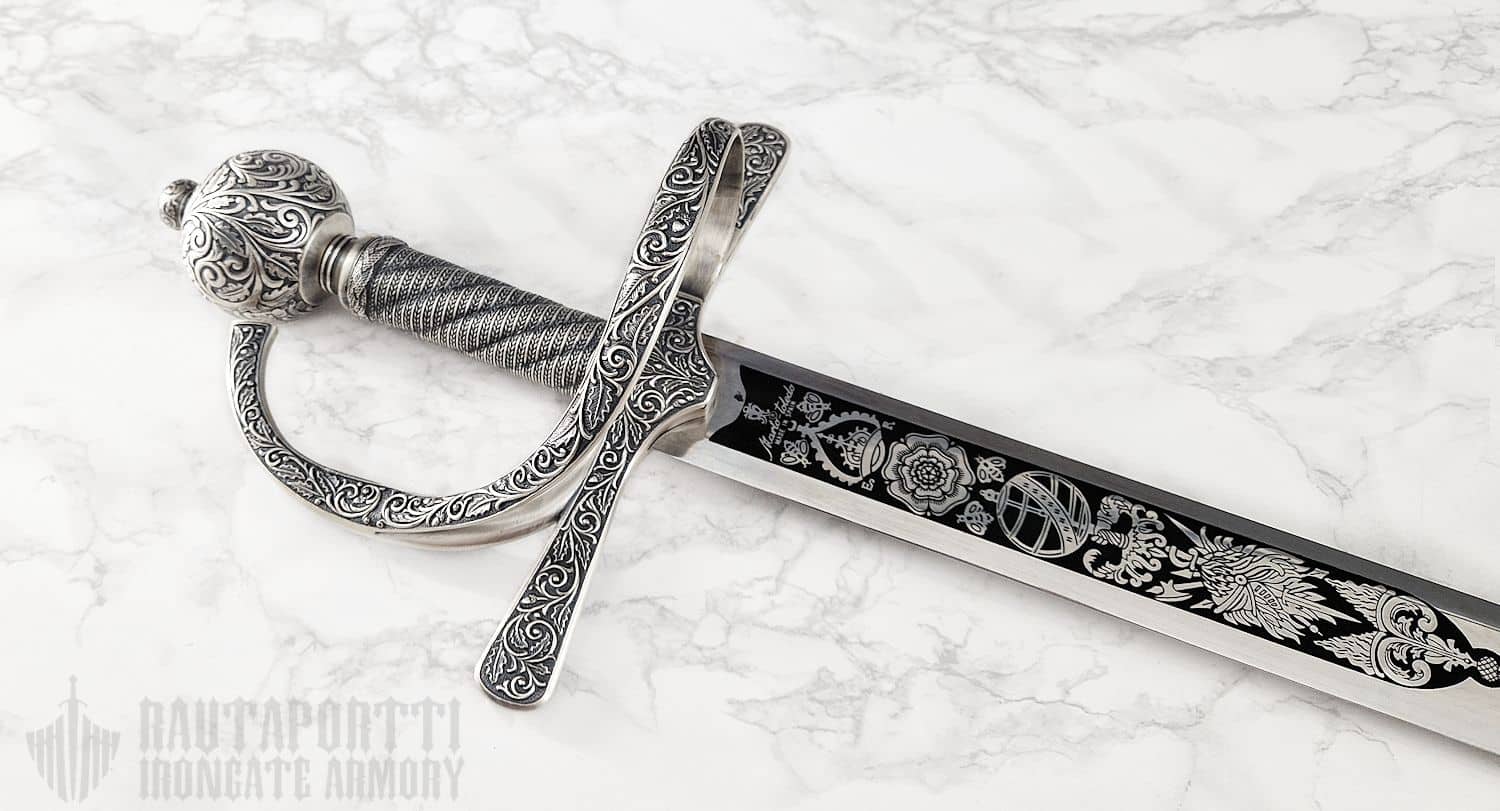
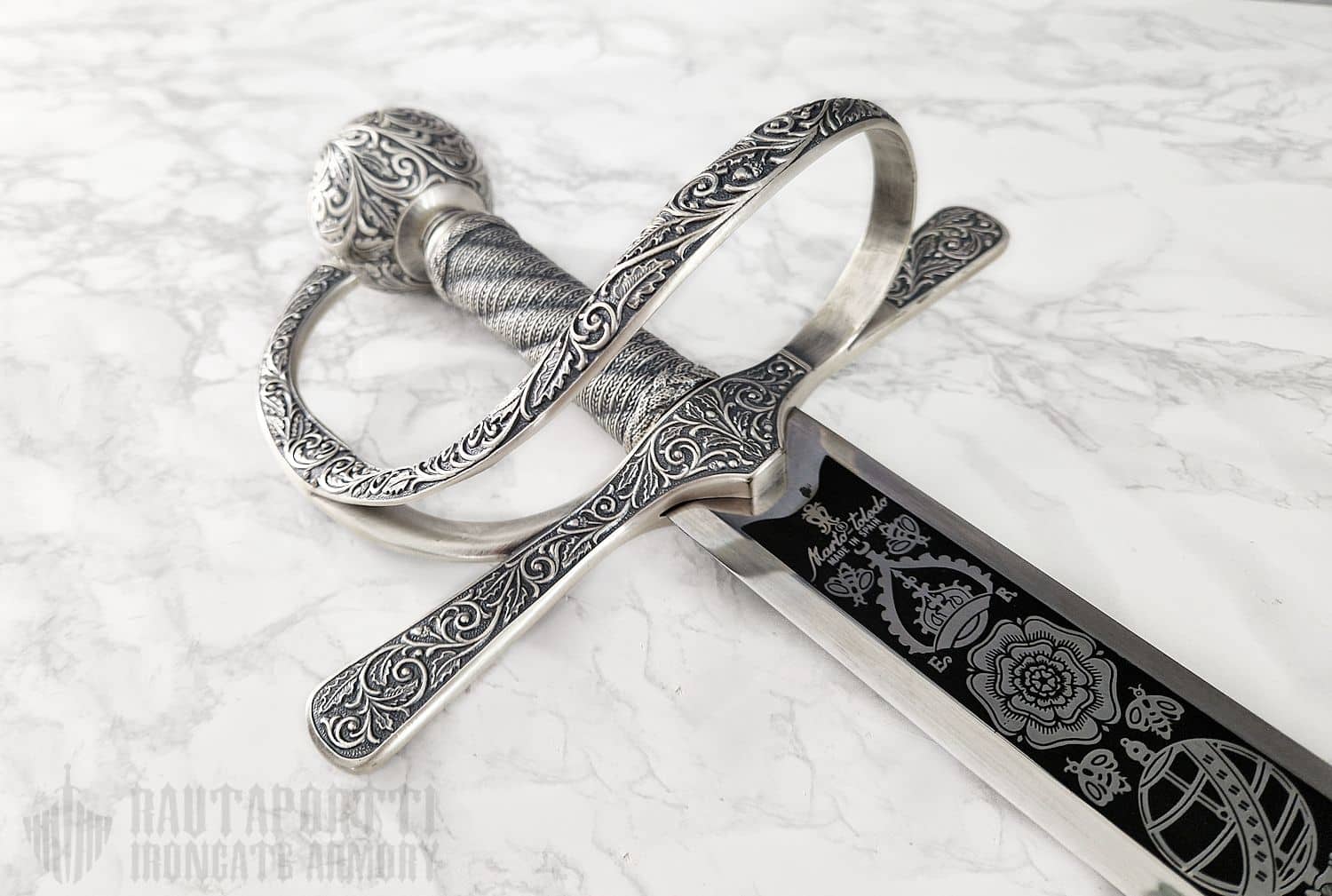
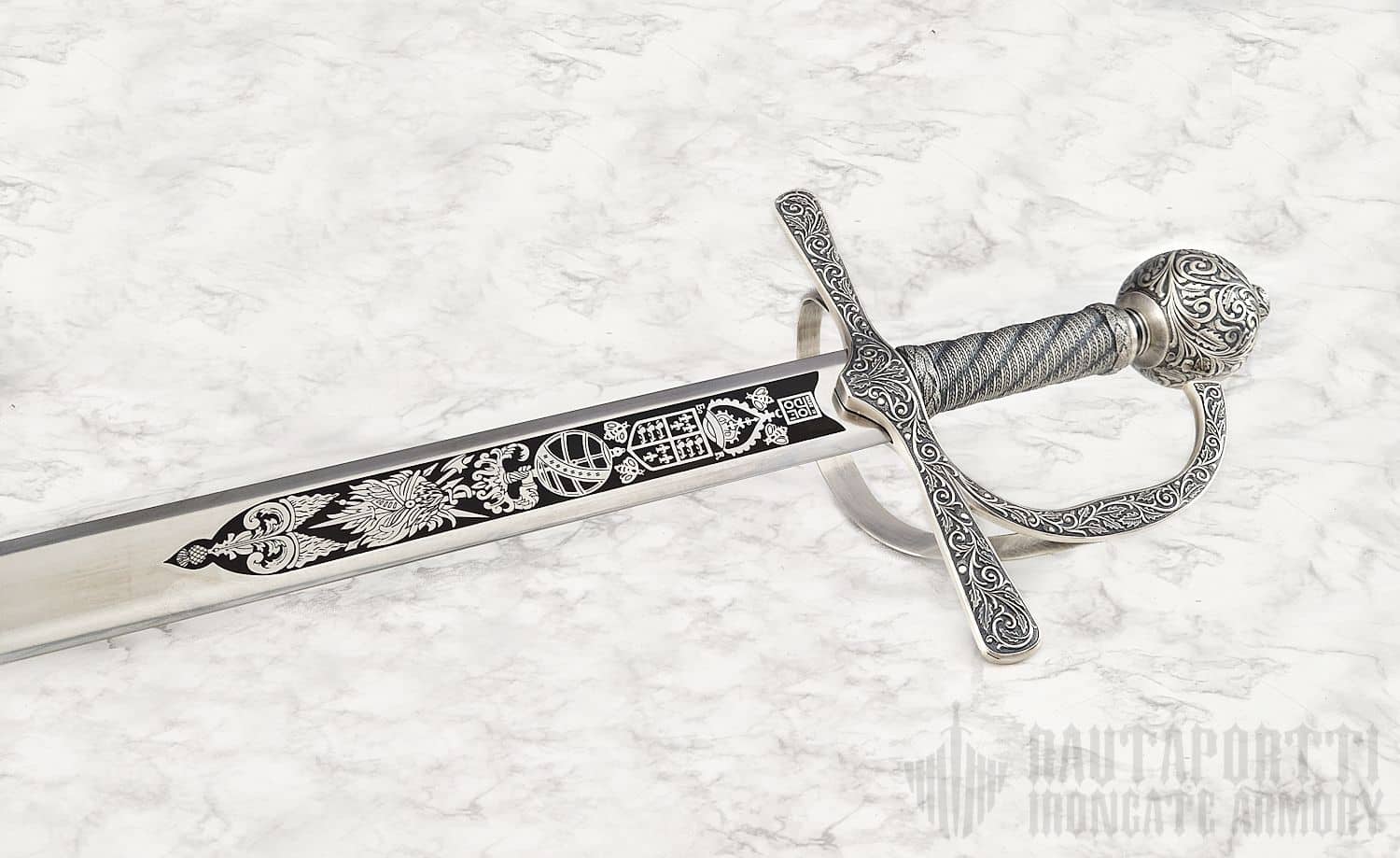
Drake was given this sword by Queen Elizabeth I, and it was not simply just a ceremonial sword but a fighting one. The original is currently in the care of the Royal Navy, in HMS Drake at Devonport Naval Base. In 1967 Queen Elizabeth II used the sword to knight Francis Chichester, the first person to sail solo around the world, in Greenwich, London. Much like the previous queen Elizabeth had had his sir Francis knighted almost 400 years previously.
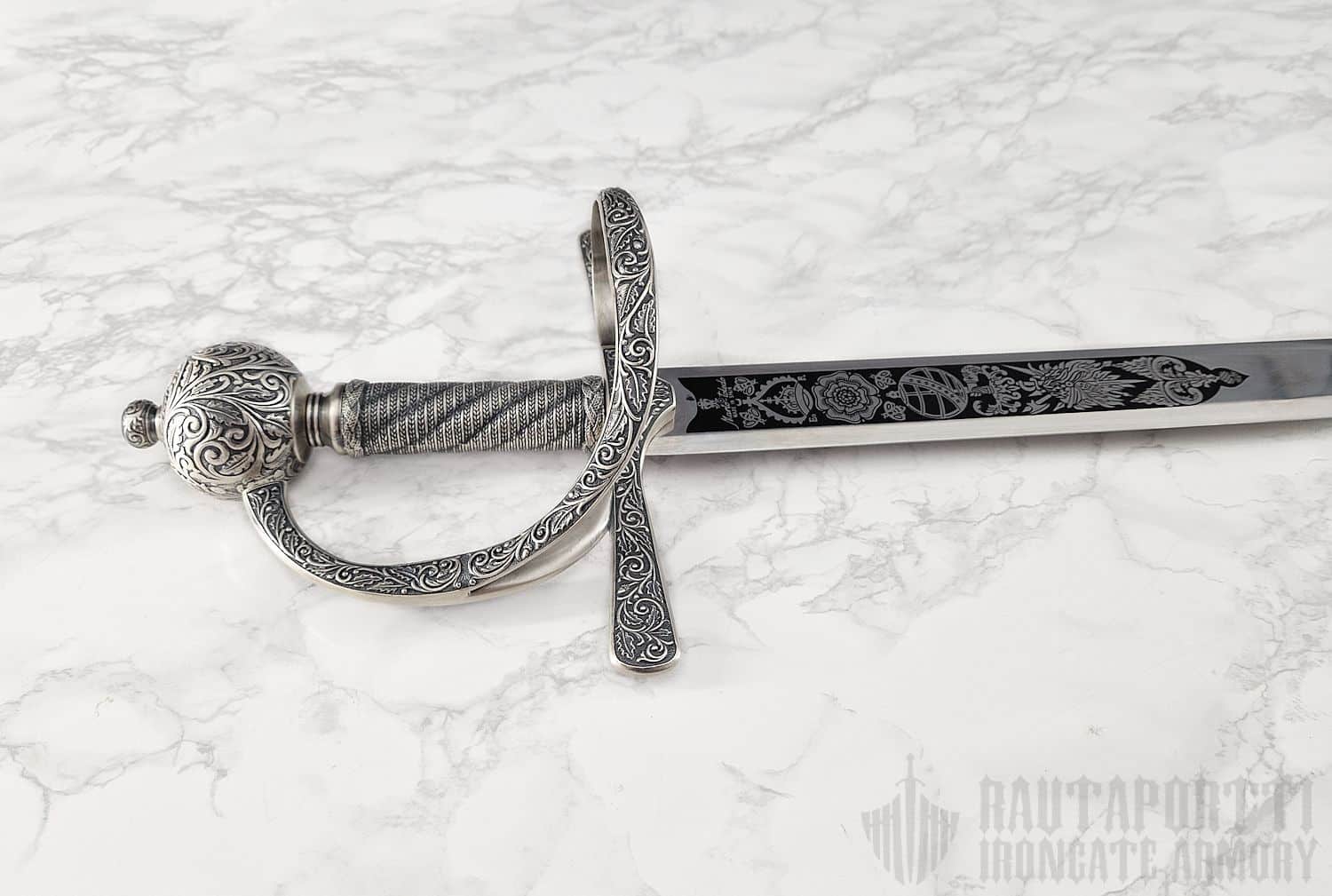
The engravings on the blade show a Royal Crown, a Tudor Rose, and an astrolabe, which symbolizes his circumnavigation of the world. The hilt, guards and pommel are decorated with oak leaves and acorns.
The stainless steel blade is easy to care for, and the sword is ideal as a decoration, as part of a costume, as a collectible and suitable for light cutting practice. The material is not suitable for steel-on-steel fencing or heavy cutting practice. No sheath included.
- Overall length: 102,9 cm
- Blade length: 94 cm
- Handle length: 17,8 cm
- Pommel: 8 cm
- Weight: 2,18 kg
- Width at Guard: 4,39 cm
- Thickness at Guard: 4,35 mm
- Blade material: 420 Stainless Steel
- Sharpness: Unsharpened
- Made by Marto (Toledo, Spain)

Really fast delivery and excellent quality goods!
Customers who bought this were also interested in...


You may also like…



Products are located in our own storehouse
In Kaarina, Finland.
Fast shipping
Orders are shipped out within 24 hours of us receiving the order.
Purchase online or offline
You can also pickup your order at our store.

Flexible payments
We accept Credit Cards & Online Banks etc.
Our Store
All orders can also be picked up from the brick-and-mortar store at Oppipojankuja 1, 20780 Kaarina. 10min drive from the centre of Turku.
Welcome!
Reviews
There are no reviews yet.